




Learning never stops
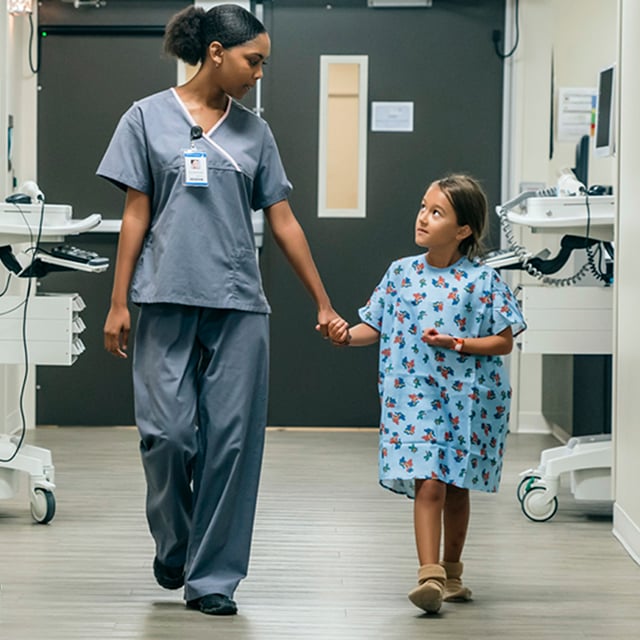
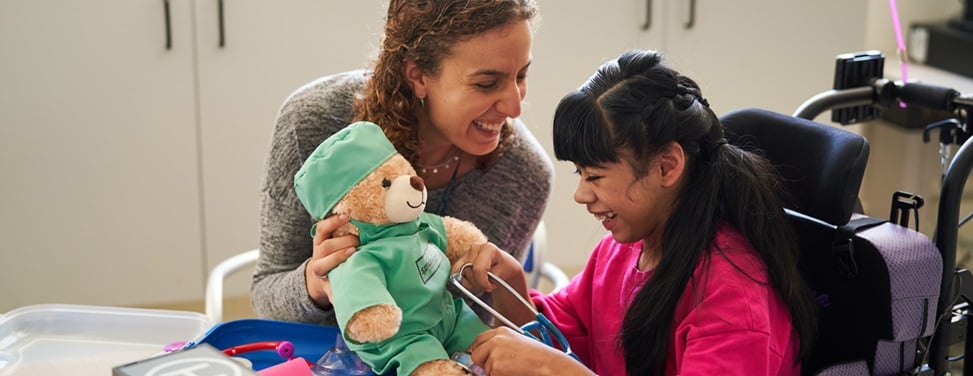
Our classroom and bedside classes help kids get credit and keep learning during treatment.
See our school program




Here to serve you
Explore our network of care for kids, from the tiniest to teens and young adults.




World-class docs
We'll help you find the best provider for your child.




Stress-free visits
Accommodations. Admission. Discharge. Procedure prep. We've got you covered.




Extraordinary kid care
Our specialists handle conditions ranging from the common to the most rare.




Referrals made easy
Contacts and resources to get your patients to our pediatric specialists




Best in Northern CA
We're ranked #1 in pediatric cancer, heart surgery, cardiology & more.





Pectus carinatum is a chest wall condition in which the breastbone (sternum) and the cartilage connecting it to the ribs push outward. The prominence may involve both sides of the chest or may be more noticeable on one side. It's the opposite of another chest wall condition, pectus excavatum, in which the breastbone sinks inward.
The exact cause of pectus carinatum is not known, but it is thought to involve extra growth of the cartilage connecting the ribs to the breastbone. The condition can run in families, is more common in boys than girls and often becomes more noticeable during the rapid growth of adolescence.
Pectus carinatum usually doesn't cause significant medical problems, although some children experience chest discomfort, shortness of breath, reduced stamina during exercise or asthma-like symptoms. For many children and adolescents, their chest appearance and its effects on body image and self-confidence are important concerns.
Pectus carinatum may also occur in children with connective tissue, genetic, skeletal or cardiac conditions, such as Marfan syndrome, Noonan syndrome, scoliosis or mitral valve abnormalities. When there are signs of an associated condition, we coordinate evaluation with UCSF specialists in cardiology, genetics, pulmonology, orthopedics and other specialties as needed.
The UCSF Benioff Children's Hospitals Chest Wall Program provides comprehensive evaluation and treatment for children, teens and young adults with pectus carinatum and other chest wall conditions. We offer both nonsurgical and surgical treatments, always tailoring the approach to the type and severity of the condition and to each patient's anatomy, chest wall flexibility, age, symptoms and personal goals. Whenever possible, we use the least invasive treatment that can provide a good long-term result.
Our team also has extensive experience treating asymmetric and hybrid chest wall conditions, including patients who have both pectus carinatum and pectus excavatum. These conditions often require an individualized combination of techniques to achieve the best possible chest wall symmetry.
Our pediatric surgeons work closely with anesthesiologists, pain medicine specialists, cardiologists, pulmonologists, radiologists, geneticists, orthotists and other pediatric specialists as needed to provide coordinated care from evaluation through treatment and recovery.
The main sign of pectus carinatum is a jutting out of the breastbone and adjacent chest wall. The prominence may affect both sides of the chest or be more noticeable on one side. Many children have no other symptoms. When other symptoms occur, they may include:
Pectus carinatum is usually diagnosed through a physical examination. During the visit, the doctor assesses the shape, symmetry and flexibility of the chest wall and determines how easily external pressure can correct the condition.
Not every child needs imaging or additional testing. In some cases, however, the doctor may recommend an X-ray or other imaging studies or have your child undergo cardiac, pulmonary or genetic evaluation to better understand their chest wall anatomy or evaluate for an associated condition.
Some children with very mild pectus carinatum do not need treatment. When treatment is desired, the two main approaches are external bracing and surgery. The appropriate treatment depends on the type and severity of the condition and how flexible the chest wall is. Age is also a consideration because the chest wall generally becomes more rigid as a child grows.
External bracing is usually the first-line treatment for children and teens whose chest wall is flexible enough to be reshaped with external pressure.
A specially fitted compression brace applies pressure to the protruding area and gradually remodels the chest wall toward a more normal contour. Bracing tends to work best when relatively little pressure is required to correct the prominence and the brace is worn consistently.
If your child is a candidate for bracing, an orthotist will fit the brace to their chest. The brace can be adjusted as the chest wall changes and your child grows.
The amount of time the brace needs to be worn each day and the overall length of treatment vary from patient to patient. Treatment may last several months to a year or longer, depending on the severity of the condition and flexibility of the chest wall and how quickly it responds. Regular follow-up allows the pediatric surgeon and orthotist to monitor progress and adjust treatment as needed.
Surgery may be considered when the chest wall is too rigid to respond well to bracing, when bracing has not been successful or when the condition is severe, significantly asymmetric or part of a more complex chest wall condition.
There is no single surgical approach that works best for every patient. We tailor the treatment to your child's specific condition, goals and needs.
When appropriate, we use a minimally invasive surgical technique. Working through small incisions and with the help of thoracoscope (a tiny camera used to see inside the chest), the surgeon makes controlled cuts in the abnormal cartilage. These cuts make a rigid chest wall more flexible and reduce the amount of force required to reshape it.
The surgeon may then put in place a titanium bar, called a pectus bar, to reshape the protruding chest wall and maintain the correction while the chest wall remodels. The bar is removed during a later procedure.
Traditional open surgery may be necessary if a child has more than one type of chest wall condition or the chest bones have become rigid. There are several different types of surgical procedures; the most appropriate depends on your child's specific anatomy and needs.
In all treatments, our goal is not simply to flatten one prominent area but to improve the overall shape and symmetry of the chest wall as much as possible. We'll talk with you and your child about the options and make treatment decisions together.
During surgery, your child receives general anesthesia. We also use cryoanalgesia, a technique that temporarily numbs the nerves between the ribs, which helps manage pain afterwards. By reducing postoperative pain, cryoanalgesia has decreased the need for opioid pain medications and helped patients recover more quickly. Most of our patients are able to go home the day after surgery.
Patients treated with bracing return regularly so we can monitor chest wall correction and adjust the brace as needed. Follow-up continues throughout treatment and, when appropriate, as your child grows to make sure the correction remains stable.
After surgery, we follow patients to monitor healing, pain and chest wall correction. When a pectus bar is used, we also check its position and continue follow-up while the chest wall is remodeled. The bar is removed during a later procedure, followed by additional visits to make sure the correction remains stable.
UCSF Benioff Children's Hospitals medical specialists have reviewed this information. It is for educational purposes only and is not intended to replace the advice of your child's doctor or other health care provider. We encourage you to discuss any questions or concerns you may have with your child's provider.

Best in Northern California for orthopedics

Ranked among the nation's best in 11 specialties
Learning never stops