


























Emergency Department
When your child is facing a medical emergency, there's no substitute for a specialty children’s hospital. Young patients require distinct tests and equipment for their small bodies. Kids are at greater risk for serious breathing problems, less tolerant of blood loss, and more vulnerable to head injury than adults are – and the younger the child, the smaller the margin for error.
That's where UCSF Benioff Children's Hospitals makes all the difference. The pediatric Emergency Departments at our San Francisco and Oakland locations are focused exclusively on kids, with a staff of doctors and nurses trained in pediatric emergency medicine who are available 24 hours a day, 365 days a year. Our patients also have access to a full-service suite of care with more than 150 top-ranked pediatric specialists. Critical medical and surgical divisions are on call at all times for the more intensive care.
Our Oakland ED is certified as a level 1 trauma center by the American College of Surgeons and is the only state-designated Pediatric Critical Care Center in Alameda and Contra Costa counties. This distinction marks us as a center of excellence in all areas of pediatric care, from emergency care and intensive care through rehabilitation services.
Our Oakland location also has a special five-bed asthma care unit for patients to receive asthma treatment and education. For all these reasons and more, we're the leading pediatric emergency service provider in Northern California.
NOTE: If you think your child may be experiencing a life-threatening or severe condition, immediately call 911 or go directly to the nearest emergency room.
Our locations (2)

San Francisco, Larkspur, Mill Valley, Oakland, Redwood City
Urgent Care Clinic
Awards & recognition
-
Ranked among the nation's best in 11 specialties

Staff superheroes
It’s a bird. It’s a plane. It’s a window washer! Dressed as a superhero to clean and brighten your day.

Support services
Clinical trials
International CRDS Registry
Composite of malignant syncope, ICD shock, cardiac arrest, and sudden cardiac death
Recruiting
More about this studyRegistry of Patients Diagnosed With Lysosomal Storage Diseases
Prenatal presentation of symptoms (e.g. hydrops) appearing on fetal imaging such as ultrasound and ECHO.
Recruiting
More about this studyMOON Shoulder Instability-Cohort of Patients Undergoing Operative Treatment.
Patients will fill out PRO's after surgery
Recruiting
More about this studyA Multicenter Access and Distribution Protocol for Unlicensed Cryopreserved Cord Blood Units (C...
The primary objective of this access and distribution protocol is to examine the incidence of neutrophil recovery of ≥500/mm3 after cord blood transplantation in a multi-institution setting using CBUs that are not FDA licensed.
Recruiting
More about this studyISP-001: Sleeping Beauty Transposon-Engineered B Cells for MPS I
Incidence of Adverse Events as assessed by CTCAE (v 5.0)
Recruiting
More about this studyAutologous Gene Therapy for Artemis-Deficient SCID
Patient survival status and (if applicable) cause of death will be recorded to assess overall survival.
Recruiting
More about this studyInternational Registry of Patients With Alpha Thalassemia
Number of fetuses diagnosed with alpha thalassemia who survive to birth, compared to number of fetuses diagnosed with alpha thalassemia who have fetal demise or are terminated in utero. This is measured in number of fetuses alive ...
Recruiting
More about this studyStudy of Novel Therapies for Young People With Recurrent/Progressive Atypical Teratoid Rhabdoid...
Tolerability is defined as the proportion of participants receiving at least one dose of combination gemcitabine and paxalisib with a reported dose-limiting toxicity (DLT) during cycle 1 for all participants in Phase I.
Recruiting
More about this studyNaxitamab Added to Induction for Newly Diagnosed High-Risk Neuroblastoma
Measured by the presence of radiologically assessable disease by cross-sectional computed tomography (CT) or Magnetic resonance imaging (MRI) imaging and/or by metaiodobenzylguanidine (MIBG) or positron emission tomography (PET) s...
Recruiting
More about this studyLearning never stops
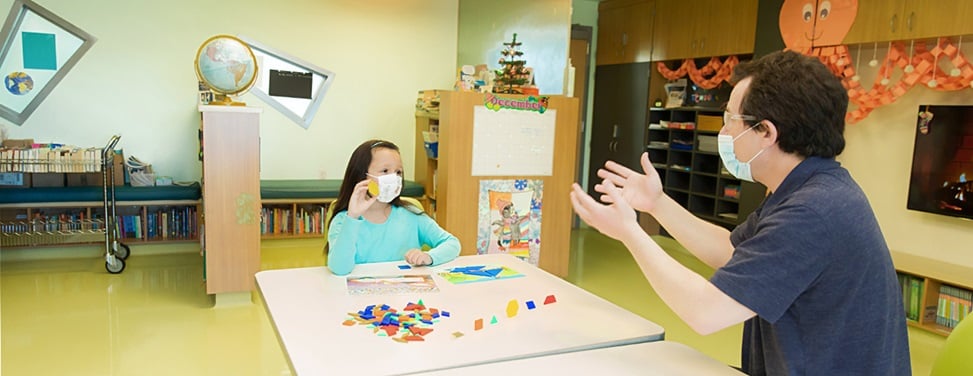
Our classroom and bedside classes help kids get credit and keep learning during treatment.
See our school program