
























Editor's note: We're delighted to announce that we've received a 2024-2025 Northern California Area Emmy Award for this captivating story featuring one of our extraordinary nurses. Learn more about how Amy's patients inspired her during this historic 17-hour swim through frigid and treacherous waters.
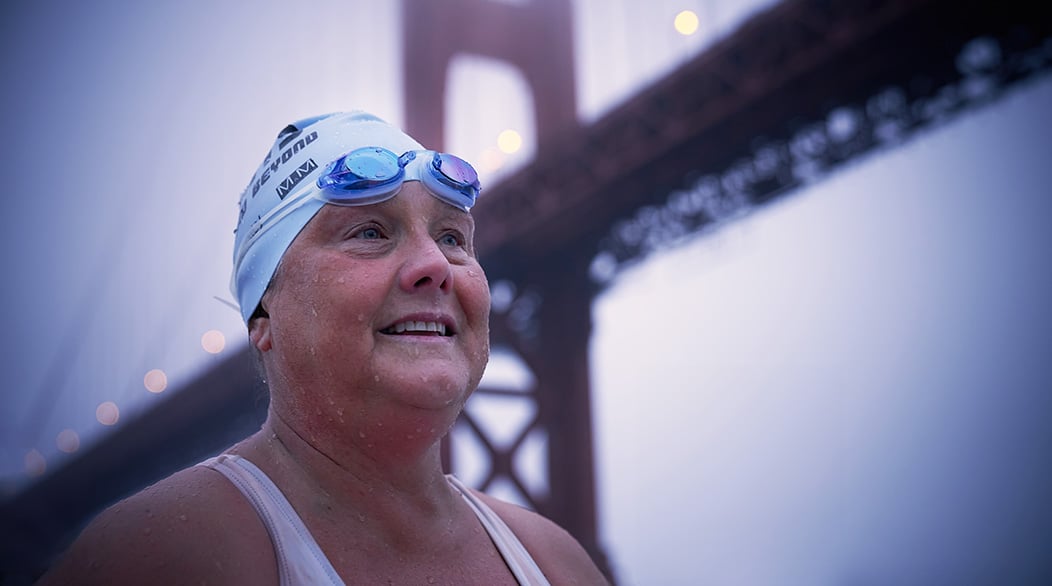
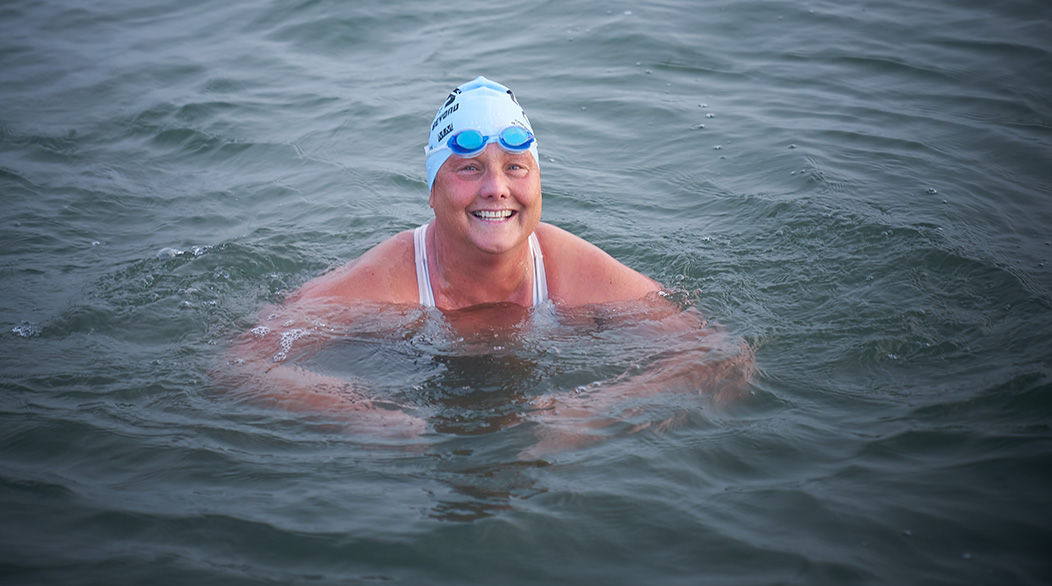
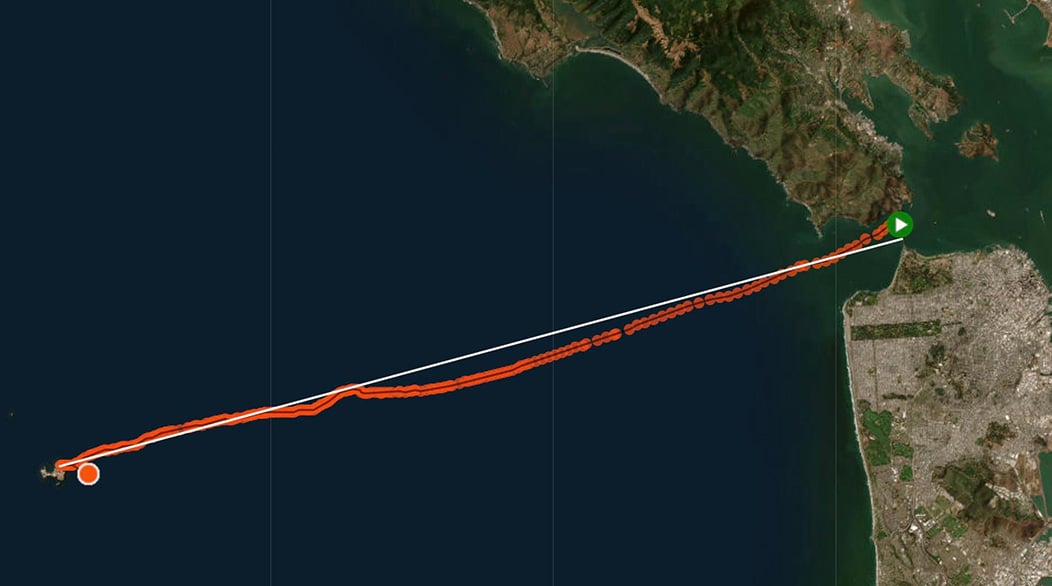
She has swum across Spain's Strait of Gibraltar, Scotland's North Channel and Northern California's Lake Tahoe. But in May, Amy Appelhans Gubser, a fetal cardiology nurse at UCSF Benioff Children's Hospitals, faced her biggest physical challenge yet: a record-setting 29.7-mile open water swim from the Golden Gate Bridge to the Farallon Islands National Wildlife Refuge.
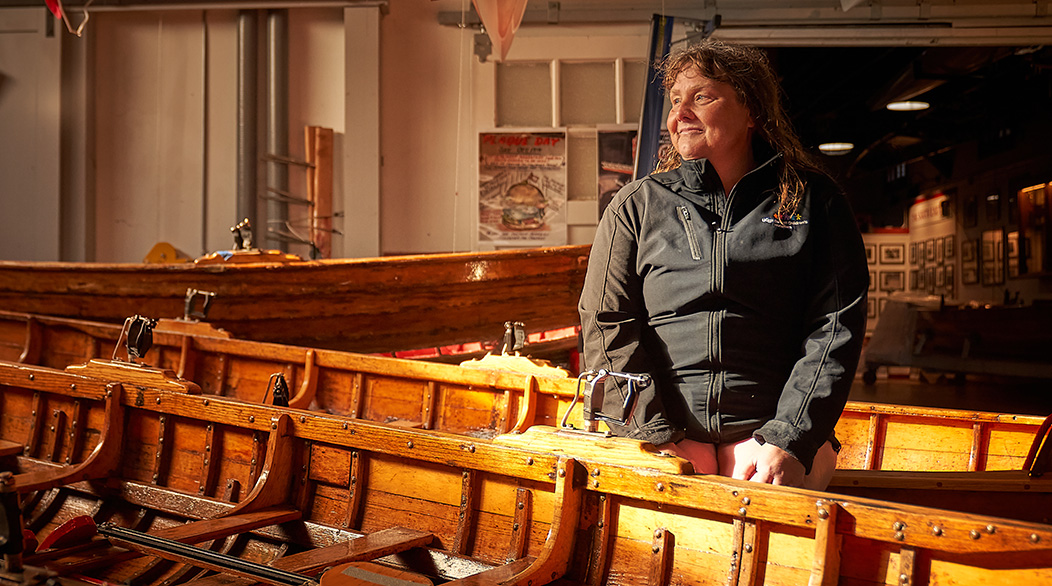
Along the way, the 55-year-old grandmother inspired people of all ages and backgrounds, from other nurses and swimmers to the governor of California. With 26 years of nursing under her belt, including many years caring for very young children in intensive care, she sees open water endurance swimming as a great stress reliever and "a very positive way" to ground herself – and credits her stamina to her job. "I don't think I could have accomplished this if I wasn't a nurse at UCSF," said Gubser. "When you're working in a critical care environment, you have to be able to prioritize. I knew I had the ability to compartmentalize and keep myself levelheaded enough to do this."
Throughout the arduous 17-hour swim, Gubser found strength in thinking about how her patients navigate their challenges. "I've seen my patients withstand things that I don't know if I could have the courage or strength to do, and they do it with such grace and poise," she said. "I channeled that and used that to propel me from mile to mile."
Fog, frigid water, bats and other obstacles
Gubser first conceived a plan to swim solo to the Farallones – as they're sometimes called – in 2019. She knew that her body, endurance and fortitude would be tested to their limits. To succeed, she needed a team of people to help her on the journey.
Many members of Gubser's support crew had been part of her successful two-way relay swim from San Francisco to the Farallones in 2015, an event that requires swimmers to switch places every hour. "When I had that opportunity and we succeeded, I knew this was possible," she said.
One of Gubser's first challenges in her solo swim to the islands was "Karl," San Francisco's famous fogbank, known for sitting stubbornly along the coast all day long. When she began swimming, her visibility was limited to 100 meters, requiring her crew to use high-tech navigation instruments.
The water temperature was a chilly 57 degrees at the start.
Just minutes into the journey, a group of bats swarmed the swimmer. "I yelled to my team, 'What are those?' 'They're bats!' they responded. One landed on one of our team members."
Hours later, Gubser encountered jellyfish and was stung several times. "I couldn't see the jellyfish coming because the water was so dark," she said. "One attached itself to my face, and I had to rip it off."
The threat of sharks loomed throughout the swim, especially near the Farallones – a popular feeding ground for great whites, thanks to the elephant seals and sea lions that haul themselves out there. Members of Gubser's crew were assigned to keep watch.
"You assume anything that touches you in the water is a shark," Gubser said. "Your head goes there. It's a natural instinct, because what you can't see is terrifying."
No sharks were sighted, fortunately, but the boat captain did spot a couple of half-eaten seals. He didn't mention that until after the swim – for which Gubser was grateful.