

























The old saying "scared to death" was all too familiar to 10-year-old Sadie Perez.
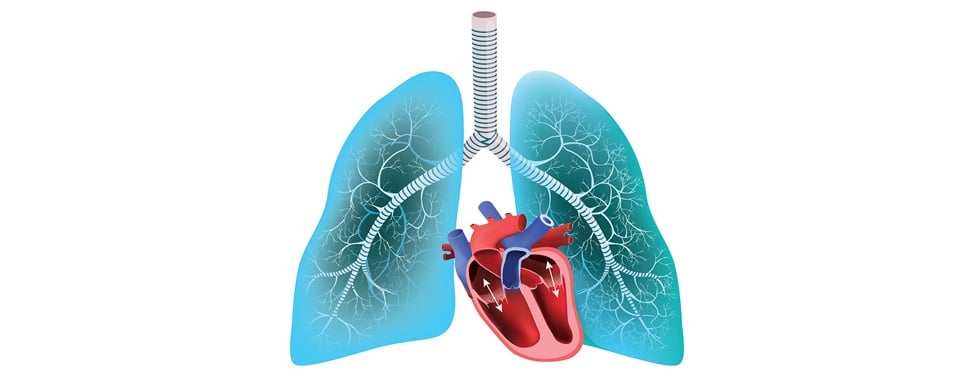
Perez has a rare heart condition called catecholaminergic idiopathic ventricular tachycardia, a type of arrhythmia in which the heart beats at an abnormally fast rate at unpredictable times.
Normally, the heart beats about 70 times a minute in a child Perez's age. Although Perez's heart would beat normally most of the time, if faced with a fear of some sort, her body would release a surge of adrenaline, causing her heart to race to 320 beats per minute. As a result, Perez would seize and faint unexpectedly.
During a period of three years, starting when Perez was four-years-old, she had six fainting episodes ‐ while playing tag, riding a roller coaster and waiting in the lunch line at Markham Elementary School in Vacaville, Calif.
"During an episode, her body would arch and stiffen and she would pass out. We thought she was having some kind of epileptic seizure," says Perez's mom, Jaime, who was so afraid to be away from her daughter in the event of another episode that she had to go to school with her every day. "It got so bad that the school said Sadie couldn't come back until we knew what was happening to her."
In search of a diagnosis, Perez was taken to the hospital after each episode. Though even after three years of extensive tests — CT scan, MRI, blood tests — doctors still couldn't figure out what was causing her to faint. It wasn't until Perez visited pediatric heart specialist Dr. Kishor Avasarala and had a treadmill test that a slightly irregular heartbeat was discovered.
Avasarala and Dr. Kathryn Collins, a pediatric electophysiologist at UCSF, then conducted an electrophysiology (EP) study at the specially equipped pediatric electrophysiology lab at UCSF Benioff Children's Hospital. Using special electrode catheters — long, flexible wires — that are guided through the leg vein into the heart, an EP study can be used to electrically stimulate different areas of the heart. Doctors can then locate sites that are causing abnormal heart rhythms.
However, Perez's EP study didn't detect anything abnormal. Determined to get to the bottom of her mysterious fainting spells, Perez's doctors implanted a miniature loop recorder under the skin of her chest.
A loop recorder is a small device that monitors a patient's heart beat and "loops" a two-minute recording into its memory during an episode of an abnormally fast or slow heart rhythm, which doctors can then retrieve to help make a diagnosis. Armed with her recorder, Perez was allowed to return to school. Though a few months later, during a fire alarm, she passed out as the other kids filed out of the building.
The loop recorder revealed that Perez's heart is extremely sensitive. When she encounters any kind of fear or anxiety, her heart rate accelerates, causing her to faint and seize. Luckily, her episodes only lasted for a minute. Though if any longer, she could go into full-blown cardiac arrest.
To prevent cardiac arrest, Avasarala and Collins implanted a special medical device called a defibrillator in Perez's chest in November 2003. While not a cure for her condition, the device senses when Perez's heart is beating too fast and delivers a shock to trigger a normal rhythm. Avasarala calls the defibrillator Perez's "guardian angel."
Perez's defibrillator has done its job a few times — during a game of hide-and-seek and while playing basketball. Though Perez's mom says her daughter has learned to "outsmart the defibrillator" before it shocks her by calming down and relaxing when she gets scared.
"Sadie is one of the most dramatic examples of a child with a severely abnormal fast heart beat," says Collins. "Her care was greatly improved by advancement in technology that has occurred over the past five to ten years."
Now, three years after having her defibrillator implanted, Perez hasn't had any fainting episodes and is busy playing outside with her friends, biking, swimming and practicing the piano and clarinet.
"She's full of spunk and impossible to slow down," says Perez's mom. "But I'm so grateful for the way things turned out. It's a lot easier to let her be a kid and have fun now."
Story written in November 2006.
Abby Sinnott is a freelance writer in San Francisco.

Arrhythmia Center
400 Parnassus Ave., Second Floor, Room A2962
San Francisco, CA 94143
Phone: (415) 353-2008
Fax: (415) 353-2334