

























University of California San Francisco | About UCSF | UCSF Medical Center
Search Site | Find a Doctor

Lauren Ishii

Teen Beats a Rare Disease and a Near Brush with Leukemia

By Amanda Dyer

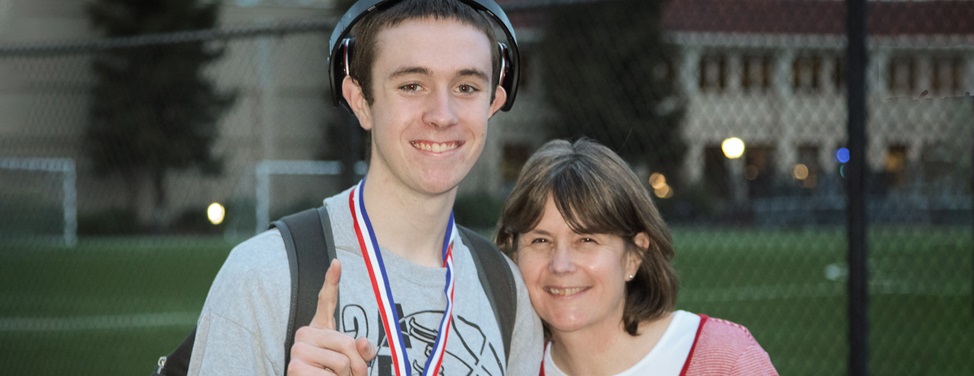
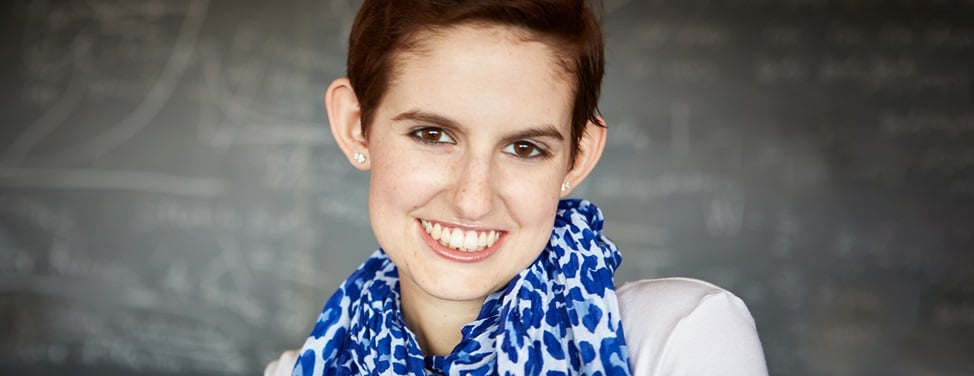
When Lauren Ishii's hair grew back, it was curly. The short black wisps curve around the borders of her face.

It's a stark contrast from the long, straight black locks that appear in a photograph that hangs in her living room.

And she's not exactly happy about that.

But after a months-long bout with myelodysplastic syndrome, an uncommon disease in children that eventually leads to leukemia, Lauren, 17, has learned not to sweat the small stuff.

In January 2006 — before the bone marrow aspirations, the chemotherapy, the transplant, and he transfusions — Lauren was a normal teenager.

Well, as normal as a straight-A, diving, tennis playing, overachieving perfectionist can be.

Lauren, then a junior at Tokay High School, had been coming home from school exhausted. Her face was pale and she had a wound on her left leg that just wouldn't heal.

Then one Friday night in February 2006, her mother, Kim Ishii, received a phone call from Lauren's doctor telling her to go to the hospital — quick.

Her blood counts were extremely low, and it needed to be dealt with.

At Sutter Memorial Hospital in Sacramento, staff did the first of what was to become many bone marrow aspirations, a process that involves inserting a very long thick needle into the crest of the hip to remove bone marrow.

The Ishiis soon learned bad news. It wasn't leukemia, but it was close. If left untreated, Lauren's myelodysplastic syndrome would develop into leukemia and eventually take her life.

Her parents were floored.

"She hasn't even had a chance to live her life and they're telling us it might be cut short," Kim said, recalling the scene months later with red eyes.

Kim said she handled the news with a healthy dose of tears. Even now, the memory makes her eyes well up and her voice waiver. Lauren was "as calm as a cucumber," her mother said.

Work to Do

The Ishiis took little time for grief, though. There was work to do.

Lauren went back to school immediately. Kim and Carl Ishii, Lauren's father, studied treatments, learned acronyms and made decisions.

In March, the family took a trip to the hospital at UCSF Benioff Children's Hospital to weigh their options.

UCSF doctors told the Ishiis that Lauren would eventually need a bone marrow transplant, and with their child's background — Lauren's father is Japanese-American, while her mother comes from a "Heinz 57," white-European background — it could take two to three years to find a donor.

They tried to find a match in Lauren's brother, but it didn't work.

In April 2006, more bad news came their way: Out of a search that usually yields approximately 1,000 results, Lauren had just 20, the bone marrow transplant coordinator at UCSF told them.

May brought mixed news. Out of the 20 matches, one, a 52-year-old woman living in the United States, matched Lauren perfectly.

"We were blown away," Kim said. "They told us it would be two to three years."

Within a week, though, one of Lauren's bone marrow aspirations came back with dismal results — Lauren was developing leukemia.

As Lauren prepared for the transplant, UCSF waited for the donor's stem cells.

Meanwhile, Lauren finished her junior year with straight A's. She had to quit competitive diving and tennis, though, because the risk of skinning a knee or hitting her head was just too great.

Nearly a month later, UCSF received 300 million stem cells for Lauren. They fit in a bag smaller than her hand.

'Her Second Birthday'

Lauren entered UCSF's pediatric oncology unit on July 31, the first day of her senior year.

Ten days of chemotherapy killed off her own bone marrow to make way for healthy cells.

On August 10 Lauren had the transplant.

"It's now considered her second birthday," Kim said.

All the Ishiis could do then was wait to see if the transplant would work.

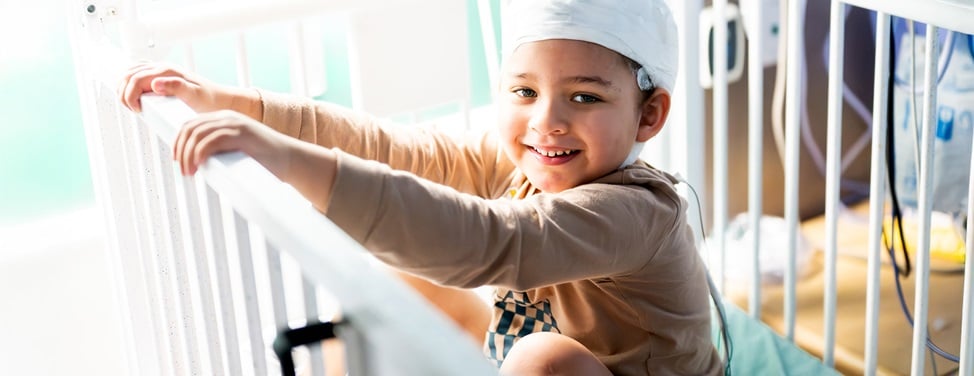
Three weeks into her hospital stay Lauren lost her hair. Along with the affected bone marrow, the chemo kills off any cells that regenerate quickly. The vessels in her eyes burst, leaving the whites of her eyes red.

She also developed veno-occlusive disease, a common post-transplant condition that causes the liver to swell and can be fatal. Lauren's eyes turned from red to yellow.
"I looked like an alien," Lauren said.

Through the beeping of the monitors, Lauren slept most of the day. Nurses pumped fluids into her, one after another.

"In 24 hours, they barely got (in) all the things she needed," Kim said.

She barely ate. Hardly anybody in her unit did.

"I don't even remember what was going on," Lauren said.

The whole ordeal seems like a blur to her. The five weeks in the hospital room by herself, the needles, the tubes, the machines; she shrugs them off as part of her life. To her, it was just something she had to do.

Her mother, on the other hand, remembers every detail. Kim kept a journal throughout the visit.

She and Carl updated Lauren's progress on a Web page at carepages.com.

They visited with other families but knew not to bother some.

"You saw families and you know their kids didn't make it," Kim said.

In September, the liver condition finally cleared up and Lauren recovered faster than anybody expected.
In preparation for her return home, the Ishiis tore out all of their carpet and replaced it with hardwood floors. Her room was scrubbed from top to bottom to prevent infection.

Catching Up

Lauren passed most of her time at home catching up with school. Friends could visit and bring her homework, but doctors cautioned against going to stores or hanging out in large crowds.

She took her ACT test at Tokay in a classroom away from the other students.

In March she returned to school for the first day of the fourth quarter.

In June she graduated from Tokay High School near the top of her class.

People are quick to tie words like "inspiration" and "amazing" to her struggle. Lauren would like to forget it even happened.

"My hair's just shorter," she says with a bright toothy smile.

These days, Lauren hangs out at home and waits to attend school at California State University, San Jose, to study nursing. She plans to focus on pediatric oncology.

The Ishiis have learned many things since Lauren's diagnosis, but probably the most poignant is the need to focus on what's important.

In the hospital, when she heard someone complain about his or her cat, she would think, "You are lucky."

Now, Kim plans to focus on paying her good fortune forward.

She's spoken to the Delta Blood Bank employee recognition dinner. She's talked to parents of children waiting for transplants, and she plans to speak at a donor recognition dinner soon.

Lauren, sporting a new tan from a recent Mexico cruise, will return to a bit of normalcy before taking off for school in the fall.

She said she's enjoying life without constant transfusions and doctor's appointments.

What Lauren took away from the past few months is simple: "I've learned to live life day by day and take the good with the bad."

Story first published in the Lodi News-Sentinel, June 13, 2007. Reprinted with permission.

Related Information

UCSF Clinics & Centers

Cancer & Blood Disease

Blood & Marrow Transplant

Blood & Marrow Transplant Program
505 Parnassus Ave., Sixth Floor, Room M-659
San Francisco, CA 94143
Phone: (415) 476-2188
Fax: (415) 502-4867

Conditions Treated

Patient Experiences

  • Lavinia Epps
    Teen Inspired to Share Her Bone Marrow Transplant Experience
  • Vann Hale
    Unrelated Marrow Donor Saves Youngster's Life
  • Melissa Macalisang
    Father Donates Marrow to Save Young Daughter's Life
  • A.J. Williams
    Marrow Transplant Saves Baby with 'Bubble Boy Disease'