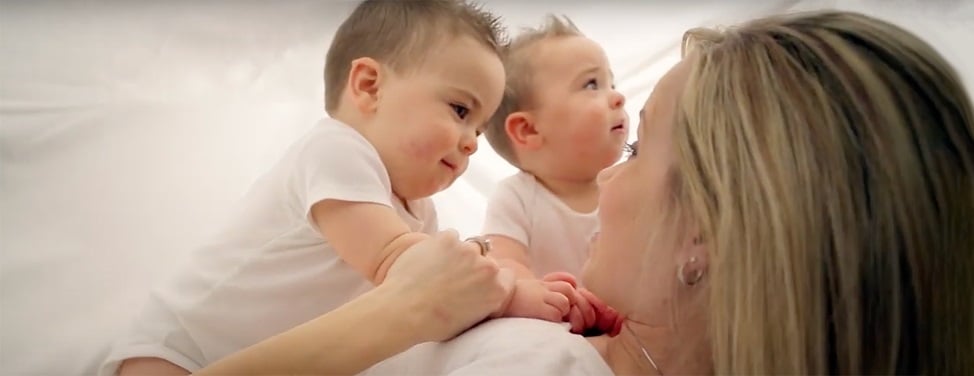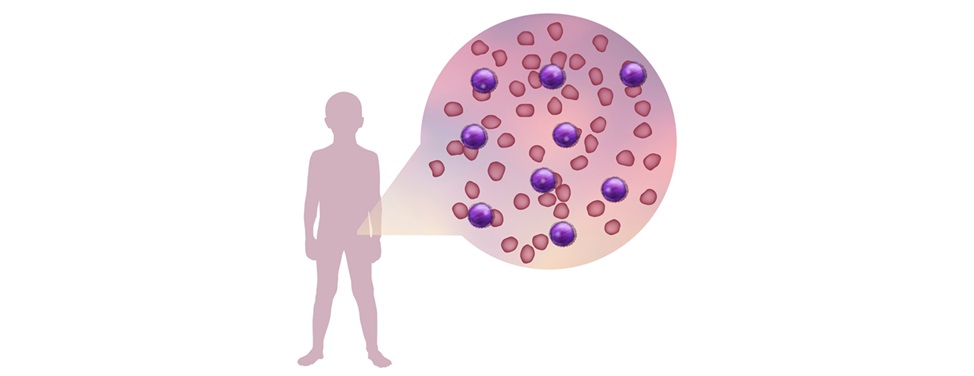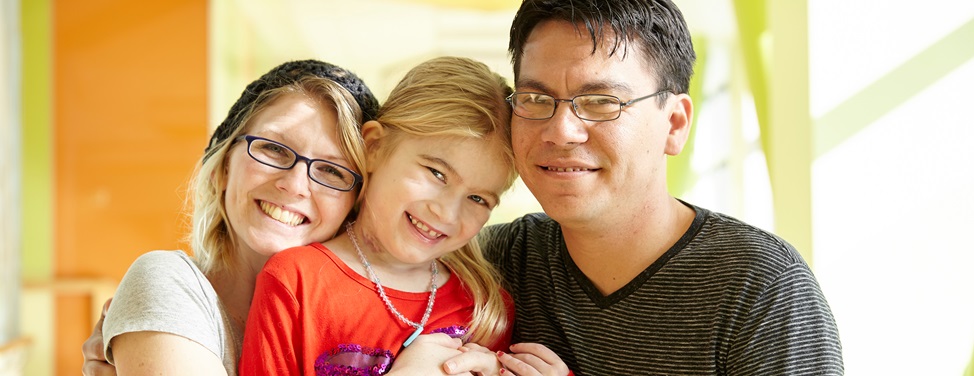


























In the first moments after his birth, Hayden — the son of Melissa and Steve Bradley — looked fine. But a few hours later, he was a "blue baby." His red blood cells weren't transporting enough oxygen through his body, resulting in a bluish tinge to his skin and lips.
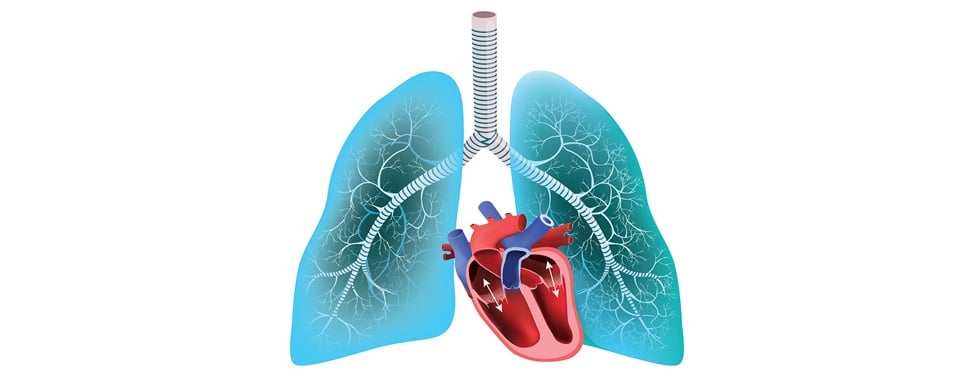
That night in May 2002, newborn transport specialists at UCSF Benioff Children's Hospital rushed Hayden by ambulance from Kaiser Permanente Medical Center in Santa Rosa to the UCSF Pediatric Heart Center. Advanced technologies that detect defects in children's hearts — some of which were developed at UCSF — showed that Hayden was born with a condition called pulmonary atresia in which a blocked valve prevents the right heart from pumping blood to the lungs to take up the oxygen necessary for survival.
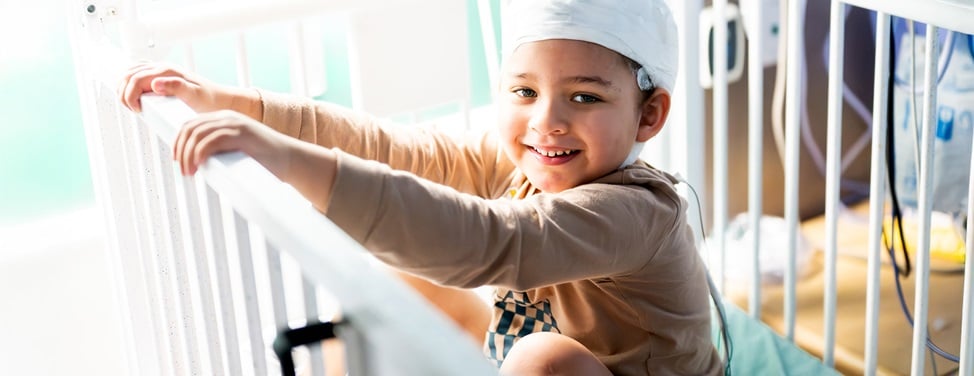
Neonatal intensive care specialists, who specialize in the care of newborns, told the Bradleys that Hayden was receiving so little oxygen that brain damage was a real possibility. He was given an intravenous medicine to keep open a blood vessel called the ductus arteriosus that connects the aorta to the arteries of the lung in the fetus. The ductus normally closes soon after birth — by keeping it open, an adequate flow of oxygen could be maintained temporarily.
UCSF researchers discovered the natural hormones that signal the ductus ateriosus to remain open or to close after birth. Thousands of babies' lives are saved each year because medications can be used to maintain this connection until newborns are stable for surgery or catheter procedures.
"For the first three days, Hayden was the sickest baby in intensive care," said Melissa Bradley. "I was hysterical. I lost my father a few years ago and that was devastating. But Hayden being so sick was the worst pain I have ever felt." Melissa counted 12 intravenous tubes inserted into Hayden's head during his stay in intensive care to support him with medication and monitor his vital signs.
His third morning in the hospital was the worst day of Melissa's life. "We baptized little Hayden. His prognosis was not good," Melissa said. "And he was so unstable that his (catheterization) procedure was a frightening prospect."
A few years ago, UCSF pediatric heart surgeons would have opened Hayden's chest and put his heart and lungs on bypass to open the blocked valve. Now, pediatric cardiologists repair some congenital heart defects using miniature tools at the end of flexible tubes called cardiac catheters. The catheter is inserted into a tiny incision in the groin or neck and then threaded through the arteries to the heart.
Hayden's cardiac catheter intervention was a recently developed procedure that uses radiowave energy to burn a tiny hole in the blocked valve. Another catheter, tipped with a tiny balloon, is slipped across the opening and inflated to fully open the valve. Hayden's doctors are leaders in the catheter interventions that save lives without surgery. The technique to make an incision with catheter radiowave energy was developed at UCSF to treat a heart condition in adults. Now, it's is being used with miniature tools for babies with heart defects such as Hayden.
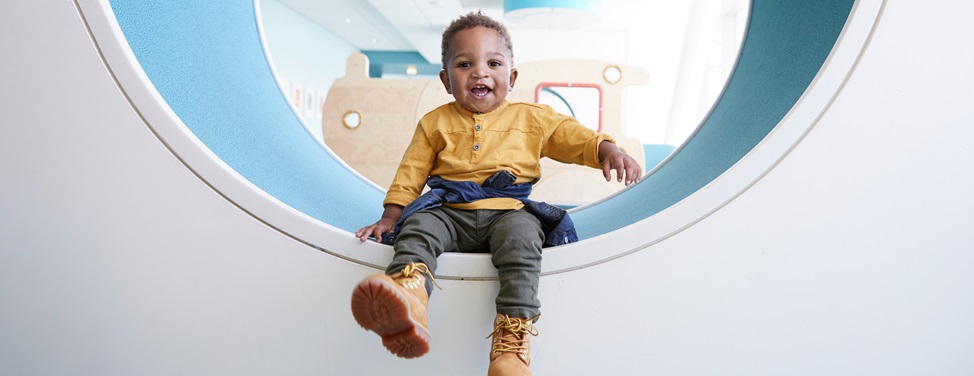
Today, Hayden is an energetic and active baby.
"Whenever we go to see a doctor now, the entire medical team says the same thing, 'He can't be a cardiac baby. He's so pink,'" Hayden's mom said. "I know this sounds corny, but it's true. Hayden is a miracle baby. I have no doubt, if Hayden had been born 20 or even 10 years ago, he wouldn't be alive today. Hayden is a direct beneficiary of cardiovascular research."
Hayden is sitting up and learning something new each day of his precious life. He has been gaining weight and is not on any medications, other than iron supplements. He had a cardiac catheterization at the end of August and will most likely need another procedure to nudge his valve open again when he's older, but Melissa Bradley is just thankful that her son is healthy and alive.
"My child still sleeps with me every night. If I can't tell he's breathing, I wake him up," she said. "Hayden is a true miracle and I will never take him or his health for granted. And I will be forever grateful to the doctors at UCSF Benioff Children's Hospital for saving Hayden's life."
Story written in 2003.

Cardiac Catheterization Laboratory
505 Parnassus Ave
San Francisco, CA 94143
Phone: (415) 353–1600
Fax: (415) 353-8711