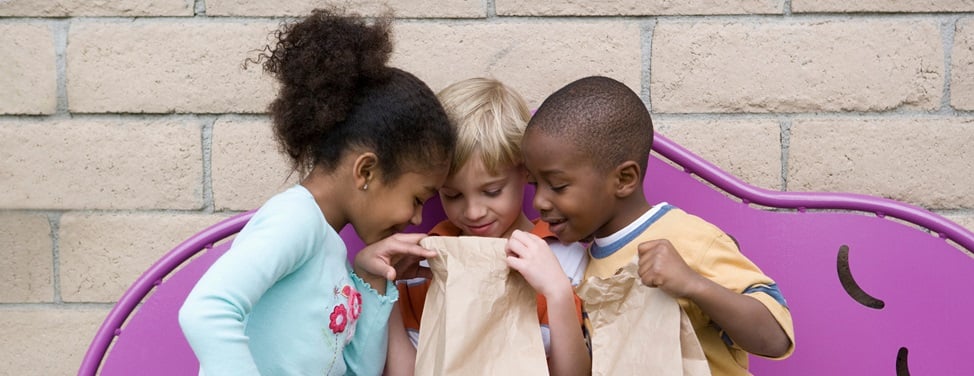




























The "tween years" can be challenging for both children and their parents. Young adolescents are continuing to explore their community and world and beginning to develop unique identities separate from their parents.
Although it's not often acknowledged by the child, parents are still extremely important in the life of a young adolescent. Your child needs your encouragement, teaching, discipline, as well as your ability to model social interactions and decision making.
Nutrition
By now, most children know which foods are healthy and can be encouraged to make nutritious choices.
- Allow your young adolescent to look through cookbooks and choose new, healthy recipes for the family to try. He or she can make a list of ingredients and go shopping with you. Preparing a meal gives tweens the opportunity to learn organizational skills, be creative, help the family, and share in the enjoyment of eating food they prepared.
- Make breakfast foods like eggs or pancakes for dinner, and make a dinner food like tacos for breakfast. Tweens like knowing their parents can be flexible with routines.
- Continue to be a good model by choosing healthy foods and eating plenty of fruits and vegetables.
- Some research shows that Americans need additional vitamin D. Consider a multivitamin.
- Tweens and adolescents are growing rapidly and need calcium to develop good bone health now and in the future. Adolescents need at least 1500 mg of calcium a day, so consider a calcium supplement.
Everyone in the family should limit intake of fried foods, fatty foods and junk foods. Since you control the shopping list, choose your groceries carefully. Don't buy sodas, chips, candies, cookies or cupcakes. Nutritious snack alternatives include fresh fruit, popcorn, pretzels, cheese and crackers, string cheese, raisins, nuts, carrot sticks, yogurt and dried fruit.
Family Dinnertime
One of the best family traditions is sitting down together for meals. We especially encourage families to eat dinner together. A family dinner allows the family to regroup and share the day's events with each other. You can use this time for fun, sharing experiences, talking about feelings and emotions and discussing problems. However, it is not a time for discipline. Mealtimes should be relaxing. It's also a good idea to turn off the TV during dinner to encourage everyone to talk.
Research has shown that teenagers are less likely to participate in high-risk behaviors if they have shared mealtimes with their parents.
Dental Care
Your child should continue to have regular dental visits and should brush and floss at least twice a day, using a toothpaste containing fluoride.
Puberty and Sex Ed
Most parents and their adolescents agree that sex issues should be taught in the home. However, over one-third of adolescents surveyed said they had never had helpful conversations about sex with their parents. The middle school years are an important time to connect with your pre-teen and discuss these issues.
During puberty, male and female bodies transition from childhood to adulthood and become capable of reproduction. Puberty usually begins between the ages of 9 to 13 in girls and 10 to 14 in boys. Both boys and girls gain weight and grow taller during puberty. Chemical hormones are produced that cause changes in their bodies.
Young adolescents have many questions and concerns about the process of puberty — whether or not their bodies are normal and what changes they can expect. Pre-teens also experience emotional changes and may quickly go from excitement to sadness, without being able to explain why.
School
The transition to middle school or junior high can often be difficult. Students have to navigate a new school and learn how to change classrooms several times a day. Your pre-teen will also have several different teachers, each with their own rules. So, your student will need to be both more organized and more flexible than he or she was in elementary school.
Pre-teens should be able to easily read most newspapers and magazines and understand what they are reading. They should also be able to complete math problems that involve multiplication, division and fractions. If you have any concerns about your student's abilities at school, please make an appointment to talk with the school counselor, principal or pediatrician.
Bullies
Bullying can increase during the middle years and, unfortunately, can become very serious. Bullying can take the form of emotional as well as physical abuse, and emotional distress is often much more damaging. Students are even at risk of emotional abuse when using websites and chat rooms online.
Please talk with your child frequently to make sure he or she feels safe at school. There are many resources for students who experience bullying, so please speak to your child's pediatrician if this is a concern.
Homework
By middle school, students should be able to take most of the responsibility for doing their homework. They should be able to keep a list of their homework assignments and complete the work themselves.
Middle school students often need help learning organizational skills, however. Take time to regularly sit with your pre-teen and discuss homework. Show your pre-teen how to keep lists of assignments and needed supplies, and how to schedule homework. The book Homework Without Tears is an excellent resource.
Television, Computers and Media
Most middle school students are constantly exposed to media. Unfortunately, time spent using media often means:
- Exposure to violence and inappropriate sexual messages
- Less time for homework
- Less time for being active, reading, exploring, creating or just daydreaming
- Behavioral changes that can include increased aggression, decreased creativity and hyperactivity
- Weight gain because children eat while watching TV and spend less time exercising
We encourage parents to control media access. Some media guidelines and information:
- Limit all "screen time" (TV, computer, videos) to one hour a day or less.
- Know that your children learn values from TV shows and advertisements. Parents should be present while their tweens are watching to discuss their values and to help kids question the messages of the programs and advertisements.
- Do not allow your child to have a TV or computer in the bedroom, as it will be more difficult to monitor programs and internet use. Place TVs and computers in a central location where you can see what your child is doing.
- Monitor internet sites and email accounts. Remind your tween to never share personal information on the internet.
- Monitor music, magazines or other literature that comes into your pre-teen's life.
- Limit cell phone use, and be aware that many companies now send pornographic material to cell phones without requests.
Research confirms that adolescents are less likely to participate in high-risk behaviors if their parents are involved in their lives and provide guidance about media use. There are websites that help families choose media that supports their values, including commonsensemedia.org and commercialfreechildhood.org.
Chores
Pre-teens need to learn how to function in the real world, and participating in household tasks helps prepare them for life outside your home. Help tweens learn how to do the laundry, cook meals, clean the house, mow the lawn and take care of the pets. Make sure your pre-teen has a list of daily and weekly tasks to accomplish. Children who do more chores at home feel more connected to their families and are more likely to achieve better grades in college.
Sports and Exercise
Exercise is especially important in the tween years. Not only do their rapidly growing bodies need physical activity, but exercise helps young adolescents maintain emotional well-being. Adolescents who participate in sports have higher self-esteem and do better in school. Tweens benefit from team sports as they learn the rules of the world, how to handle competition, how to be a gracious winner or loser and how to work diligently toward a goal.
Teaching Values
Children learn from you every day. You are their best teacher. By watching you, they learn how to talk to other people, how to treat others, how to interact in the family, how to work, how to solve problems and how to deal with emotions. They also learn what you do and do not value.
Self-Esteem
Pre-teens often measure their worth by external values such as physical appearance, money (such as clothing brands they wear) and number of friends. Pre-teens are especially likely to have a bad self-image because their bodies are changing, and they often have acne. Research shows that almost 80 percent of adolescents don't like the way they look.
Pre-teens need constant reassurance from parents that they are valued, that you see the good decisions they make and that you enjoy being with their friends. Let your pre-teen hear you telling friends how much you admire him or her for a recent good decision or accomplishment. Every pre-teen need to know that there is something special about him or her — an activity, a hobby or an area of expertise that allows your child to stand out from his or her peers. If your pre-teen does not have a special interest, hobby or an area of ability, consider encouraging him or her to pursue one.
Money
Giving children an allowance is an excellent way to begin teaching them how to handle money. Some families choose to give their children a small allowance without linking it to chores, feeling it's important for children to know that everyone benefits from the parents' employment. Other families believe children should learn that they earn money by doing work, and give children an allowance after their chores are completed. Some families combine approaches — they give children a small allowance, plus additional money for any extra work.
The most important thing is for parents to show children how to use money — how to save it, how to pay for small items at the store and how to buy gifts for others. At this point, you may want to increase your child's allowance while requiring him or her to have a budget for items to buy with the child's own money.
Decision Making
Your child should be given the opportunity to begin making decisions and experiencing the consequences, both negative and positive, of those decisions. There are many decisions a child can help make if you feel it is appropriate:
- Which after-school activities to participate in
- Which restaurant to go to
- What weekend activity to do together as a family
- Which friends to invite over
- How to spend their money
- What clothes to wear
- How to schedule homework
Show your child how to think about decisions:
- Determine what the options are
- Consider every possibility
- Consider the pros and cons of each option
- Choose the best option
- Re-evaluate after you see the results — decide whether or not it was a good choice and what you might do differently next time
Other Values
What other values do you want your child to learn?
Time Management
- Help your child create a weekly chart of chores or tasks to complete, books to read and so on.
- Make sure your child's life is not overly scheduled. Children also need time to relax, think and daydream.
Friendship
- Discuss what qualities to look for in a friend.
- Encourage your child to invite friends over. You'll be able to meet your pre-teen's friends and know what they are doing together.
Personal Acceptance of Failure
- Admit your mistakes in front of your child.
- Acknowledge your feelings, but express the idea that you can try again or learn from your mistake.
Expressing Emotions
Emotions are never right or wrong — they are simply feelings. It is our behavior that can be right or wrong. Help your child see the difference. For instance, "I can see you are very angry, but it is not acceptable to kick your brother."
Religion
Some families find a place of worship where they can meet other families who share their values and who can support their family.
Peer Pressure
- Clearly state your family's values.
- Make sure your actions match your words.
- Talk about the types of peer pressure that come through society, media and friends.
- Talk about ways to stand up to peer pressure, including the exact words to use. For instance, "I don't need drugs to make me feel happy." Role play with your pre-teen.
- Make sure your pre-teen knows you care most about his or her personal safety.
- Give reasons for making positive, healthy choices.
Drugs and Alcohol
It is much easier and much more preferable to discuss your family's values around drug and alcohol use in the middle school years. Your pre-teen still listens to you and is more likely to incorporate your values.
You should know that studies show that the earlier teens begin using drugs, alcohol or cigarettes, the more likely they will become addicted.
Communication Skills
This is a wonderful time to work on communication skills with your child. Some helpful hints:
- Clearly state your expectations so there is no confusion.
- Be accessible, approachable and willing to listen.
- Be involved in your pre-teen's life at school and with friends.
The more time you spend together, the easier the communication. Consider a weekend away with your pre-teen to talk about the upcoming physical and emotional changes as well as your family's values and expectations, and of course, to have fun together.
Safety
Some safety guidelines:
- Review bike safety rules with your child and make sure he or she always wears a helmet.
- Review your family's emergency plans for fire and earthquake. Make plans for what to do should disaster separate your family.
- Remind your child to always tell you if someone is touching him or her inappropriately.
Used by permission of Jane E. Anderson, M.D.