



























Development
Babies this age enjoy cooing and laughing as well as seeing and communicating with people. In fact, they are so interested in the world that they often would rather look around than eat. If your baby is not interested in eating, try feeding in a darkened room or use a receiving blanket to gently cover the baby's face. This may encourage the baby to focus on feeding.
Spend lots of time talking, laughing and playing "word games" with your baby. Try making a funny face or noise and see if your baby will copy you. When your baby makes a sound, copy it. In addition to "baby talk," speak to your baby in long sentences to help your baby learn language. This is a great time to begin reading stories and enjoying picture books together.
You may want to try using sign language to help your baby learn to communicate in a different way. Beginning at 6 to 8 months of age, try using a hand signal every time you use a word like "hungry" or "tired." Babies may use sign language to let you know their needs before they can talk. The book Baby Signs covers how to use sign language with babies.
Sleeping
By 4 months of age, most babies are capable of sleeping at least six to eight hours a night.
Everyone wakes up during the night, but we learn to settle ourselves and go back to sleep. If you respond to every squirm and sound your baby makes, you're not allowing him or her to learn this important skill. If your baby is still waking at night, there are several ways to encourage longer nighttime sleep:
- Develop a soothing bedtime routine. Sing or read to your baby or rock your baby at about the same time each evening.
- Try to place your baby in bed drowsy but still slightly awake.
- Try using a night light.
- When your baby awakens, try to settle him or her without feeding. Or, if you are bottle-feeding, try giving your baby some water instead of formula. If you are breast-feeding, try feeding from only one breast. By decreasing the amount of food eaten at night, you will help your baby go longer between feedings.
- Try to delay the middle-of-the-night feeding by holding your baby, offering a pacifier or letting your baby suck on your finger. Even if your baby still needs to eat after 10 or 15 minutes, prolonging the period before feeding will help your baby sleep a little longer the next night.
For more information, see the books Helping Your Child Sleep through the Night, by Cuthbertson and Schevill, or Healthy Sleep Habits, Happy Child by Marc Weissbluth.
Feeding
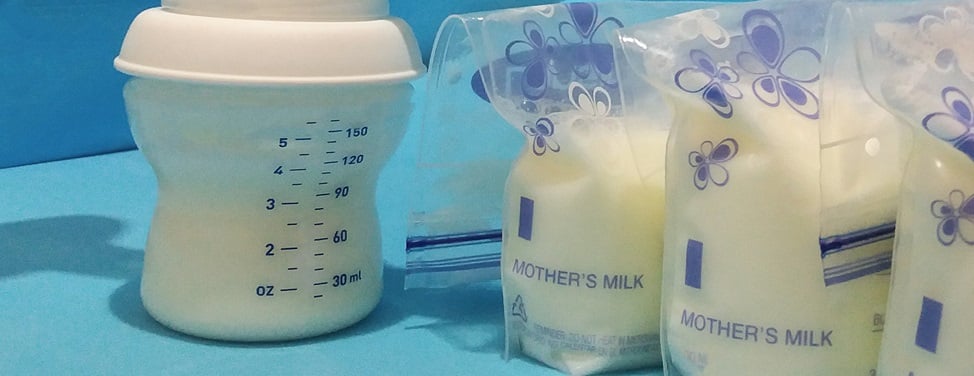
Breast milk or formula has all the nutrition your baby needs now, and you should continue feeding your baby with breast milk or formula for the next two months. Your baby does not need any additional food until 6 months of age. Four-month-olds still have an immature intestinal system and cannot control their muscles for chewing and swallowing, and therefore they are not ready for solid foods.
If your baby is mainly breast-fed, continue taking your prenatal vitamins and give your baby 400 units of vitamin D each day.
Teething
Teeth may appear anytime during your baby's first year of life. It is difficult to know when a tooth is erupting unless you can see or feel the tooth. Most 4-month-olds begin drooling and putting objects in their mouths, but this does not mean they are teething.
Teething makes some babies fussy or irritable. It does not cause a high fever. If your baby appears sick or has a fever, please call your baby's doctor.
If your baby seems uncomfortable due to teething, you can help by:
- Letting your baby suck on a cold teething toy.
- Giving acetaminophen as directed by your child's doctor. Do not use acetaminophen for more than 48 hours.
- Avoiding topical medications like Orojel or Numzit, which may cause later allergies.
Safety
A few extremely important safety tips:
- Falls — Your baby is becoming much more active and cannot be left unattended on a high surface like a bed or changing table. If you have to leave your baby alone, put him or her in a safe place on the floor.
- Hot Liquids — Your baby can reach and grab objects now, so don't hold hot liquids or sharp objects while holding your baby.
- Car Seats — Your baby should always be secured in a car seat when traveling by car or taxi. The car seat should still face backward. Babies who are accustomed to car seats behave better during car trips when they are older. Remember that you need to buckle up too.
- Small Objects — As your baby learns how to hold objects and put them in his or her mouth, keep small objects out of reach to prevent choking.
- Pacifiers — Don't tie or pin pacifiers to pajamas, as this may cause strangulation.
- Cribs — Crib toys that stretch across the crib should be removed as your baby begins to learn how to sit. You may need to lower the mattress so your baby cannot roll out.
Immunizations
Your baby will receive a second set of immunizations at 4 months of age, followed by another checkup at 6 months. Please bring your baby's immunization card to each visit.
Used by permission of Jane E. Anderson, M.D.