



























When it comes to establishing healthy eating habits, both the parent and the child have responsibilities.
Parent's Responsibility
Providing a variety of foods from which your child can choose
Parents provide appropriate food selections for meals and snacks to meet their children's needs for growth and development.
Developing a schedule of meal and snack times for your child
Children need to eat meals and snacks. Because their stomachs are so small, children need to have five to six small frequent meals, or three meals a day with two or three snacks between meals. Having evenly spaced planned meals and snacks helps you avoid questions like, "When are we eating?" and "I'm hungry, when are we having dinner?"
Providing an appropriate mealtime environment
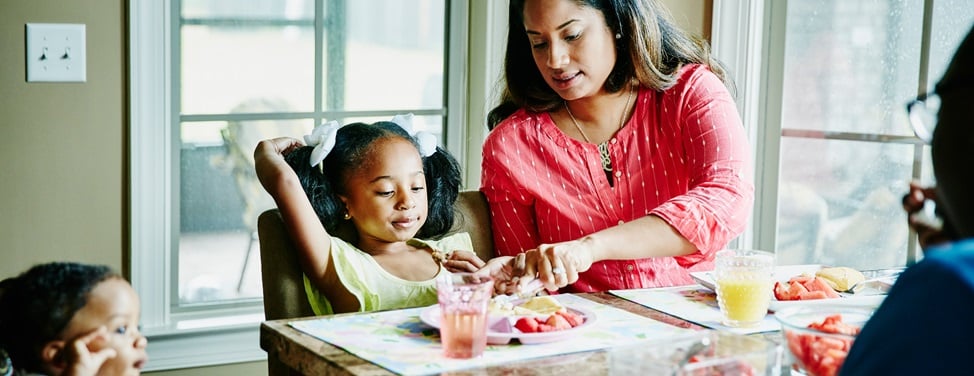
Children should focus on food during meal and snack times. Eating at the table prevents the child from confusing eating with playtime. Distractions, like watching television or playing games at the table, should be avoided.
Child's Responsibility
Deciding what to eat of the foods offered
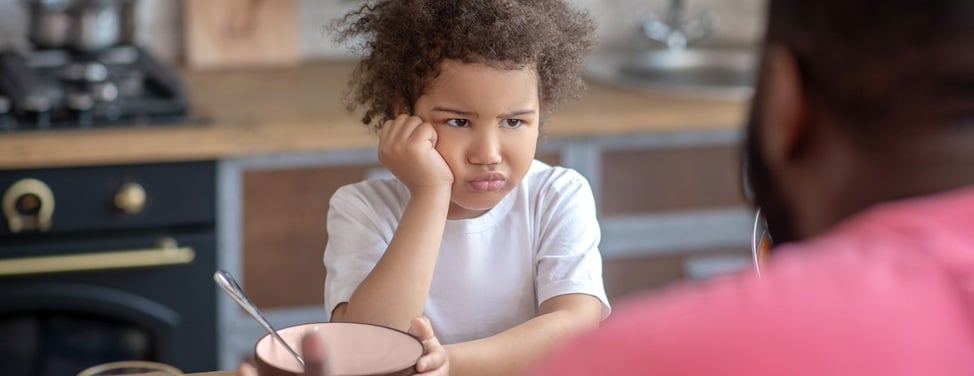
Only your child knows if he or she is hungry. If it is mealtime and your child chooses not to eat, don't try to make him or her eat. Don't only cook the foods that your child likes or make a substitute meal if he or she chooses not to eat the meal that you have prepared.
Deciding how much to eat of the foods offered
You should not make your child eat. Your child knows how much he or she needs to eat. Allow your child's hunger to regulate the amount of food he or she eats.
Pickiness or refusal to eat often results from inappropriate tactics such as force feeding, bribing and punishing. If parents eat a variety of healthy foods, the child will be more likely to try and like a variety of foods.
Studies show that children generally will grow up to eat the way that their parents eat. Predictable meal and snack times, a pleasant atmosphere and a wholesome balanced diet will provide your child with a foundation of good eating habits for her future. In addition, planning ahead will ensure that you and your child will have tasty food that is good for both of you.
What Not to Worry About
Wariness about new foods
Though it may take time, your child will learn to like a variety of foods. Children will repeatedly examine foods that they are offered, with or without trying the food items. Eventually, the child may try the food by putting it in his or her mouth and then taking it out again. These actions are normal. Avoid punishing or scolding a child for these behaviors. A child may be offered a food 10 to 15 times before swallowing it and then may only eat it occasionally.
Eating habits that change daily
Children will often eat a lot of food one day and not so much the next day. The foods the child likes also can change not only from day to day, but also from meal to meal. Some days, your child may eat a lot in the morning and not much else for the rest of the day. These habits are usually normal. It is important for parents not to focus on these fluctuations.
Appetite and appetite changes
Children know how much they need to eat and are sensitive to their appetites and appetite changes. Children also grow differently and have individual needs and eating habits. Children often eat the majority of their food early in the day. Dinner may be their smallest meal. In addition, children have different levels of activity on a day-to-day basis. Activity can affect the amount of food the child may eat on that day. It's important to keep in mind that children know when they're hungry and when they're not.