



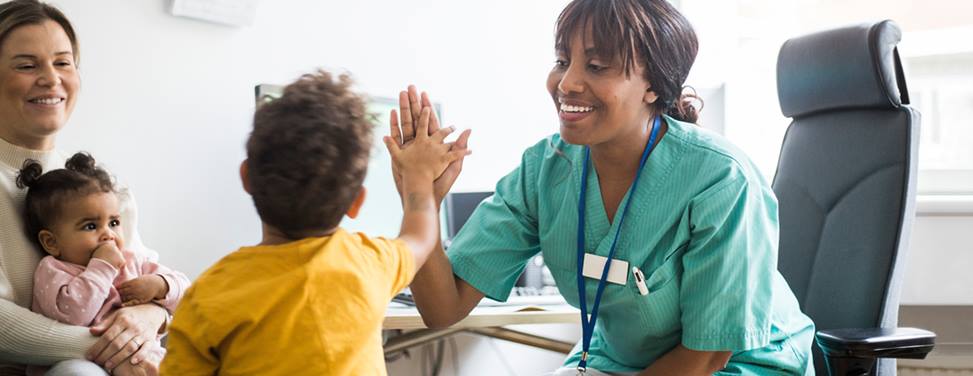

Soothing the soul
Our music therapy program nurtures patients with bedside serenades, rap workshops and more.
Find out more




Here to serve you
Explore our network of care for kids, from the tiniest to teens and young adults.




World-class docs
We'll help you find the best provider for your child.




Stress-free visits
Accommodations. Admission. Discharge. Procedure prep. We've got you covered.




Extraordinary kid care
Our specialists handle conditions ranging from the common to the most rare.




Referrals made easy
Contacts and resources to get your patients to our pediatric specialists




Best in Northern CA
We're ranked #1 in pediatric cancer, heart surgery, cardiology & more.





Spinal muscular atrophy (SMA) is a group of genetic diseases that affects the part of the nervous system that controls voluntary muscle movements, such as crawling, walking, head and neck control, and swallowing. The disease causes weakness and wasting of the voluntary muscles.
SMA affects infants, children and adults. The condition occurs at an estimated rate of 1 in every 6,000 births. Childhood SMA is an autosomal recessive disease, meaning it runs in families. Children inherit a gene from both their mother and father, although the parents may have no symptoms. An estimated 1 in 40 "normal" people are carriers of the SMA gene. If both a man and woman carry the gene, their child has a 25 percent chance of developing the condition.
Most nerve cells that control muscles, called motor neurons, are located in the spinal cord. Motor neurons send electrical and chemical messages to the muscles. In SMA, the motor neurons don't send enough signals and the muscles don't function properly and deteriorate.
The Neuromuscular Clinic at UCSF Benioff Children's Hospital is sponsored by the Muscular Dystrophy Association. It specializes in the diagnosis, treatment and research of SMA and other neuromuscular disorders that affect muscles and nerves. Our pediatric neurologists and orthopedic surgeons are among the nation’s leading SMA experts.
Each child with spinal muscular atrophy (SMA) may experience symptoms differently. There are three main types of SMA, which are defined by their symptoms and the time symptoms first develop.
Also known as Werdnig-Hoffman disease, this form of SMA is the most severe. Some children develop the disease before birth. Mothers may notice that during the last three months of pregnancy, fetal movements are very weak. The majority of children with this form of the disease will experience symptoms before 8 months of age.
The condition primarily affects the muscles that control chewing and swallowing, chest wall muscles, and arm and leg muscles. Symptoms are typically severe and may include hypotonia or diminished muscle tone, muscle weakness, respiratory problems, pneumonia, and swallowing and feeding difficulties.
Quivering of the tongue, a condition called tongue fasciculation, also may occur. Children with this form of SMA face a difficult battle and many die from recurrent respiratory infections within the first year of life. However, with new therapies, some children live into their teens or early adulthood.
This form of SMA is less severe than acute infantile and usually progresses slowly. Symptoms normally develop between 6 to 18 months of age.
Children with chronic infantile SMA may sit independently, but need support to walk or stand.
Other symptoms may include:
Some children may need a wheelchair and develop orthopedic problems, such as curvature of the spine called kyphoscoliosis.
This form of SMA is also known as Kugelberg-Welander disease. Symptoms normally occur between 2 and 17 years of age. The severity of the condition varies, but generally progresses slowly. Some children may not walk or stand on their own, while others do.
Children with this form of SMA rarely experience respiratory or swallowing problems, but may experience weakness in the shoulders, hips, thighs and upper back.
Your doctor will conduct a thorough physical exam of your child, as well as record a family medical history. These are very important steps in making a diagnosis of spinal muscular atrophy (SMA) and in understanding your child's pattern of symptoms.
To make a definite diagnosis and rule out other disorders, your doctor will recommend the following tests:
Two genes that contribute to SMA are the "survival motor neuron gene (SMN)" and the "neuronal apoptosis inhibitory protein gene (NAIP)." In over 95 percent of patients with SMA, genetic defects or changes in the SMN gene are detected.
Although we don't fully understand how the gene abnormality causes the disease, the discovery of the SMN gene has allowed doctors to make a definite diagnosis of SMA and provide specific genetic counseling to those affected as well as to SMA carriers. It has led to a number of research projects, including developing and testing new treatments in patients.
This test consists of two parts — nerve conduction studies and electromyography (EMG). During nerve conduction studies, electrodes are placed on the skin over a peripheral motor or sensory nerve. A small electric shock is emitted that may cause mild discomfort. This electrical impulse stimulates sensory and motor nerves. A recording is made from the electrodes to see how much of the impulse reaches the nerve and how fast the electricity is carried.
EMG involves inserting a needle electrode through the skin to measure the bioelectrical activity of muscles. It also can determine if peripheral nerves have been damaged.
A muscle biopsy was commonly used in the past to diagnose SMA. It may be necessary if genetic testing fails to confirm a diagnosis. During this procedure, a small sample of muscle and nerve tissue is surgically removed from a patient. The sample is examined to see if the tissue shows signs of the disease.
Children with spinal muscular atrophy (SMA) are treated at our Pediatric Muscular Dystrophy Center. They require ongoing, specialized care from experts, including neurologists, orthopedists, pulmonologists and surgeons. Although there is no cure for the disease, its symptoms and complications can be successfully managed.
Several medications are being studied for this disease. Treatments may include:
Riluzole blocks certain proteins in the central nervous system that may cause damage to nerve cells. This drug is prescribed for adults with amyotrophic lateral sclerosis (ALS), also called Lou Gerhig's disease, which is similar to SMA. Preliminary studies have suggested a benefit for some children with SMA, but doctors believe that more studies must be completed before the benefits for children are confirmed.
Hydroxyurea, a chemotherapeutic agent, and valproic acid, also known by the brand name Depakote, are being studied for possible benefits in children with SMA. Due to potentially serious side effects, it is recommended that you discuss these medications with a specialist before you give them to your child.
Children with type I and some with type II SMA have special nutritional needs because of chewing and swallowing problems. Special X-ray studies, called a swallowing study and cine esophagram, may help determine the foods that are dangerous to your child.
Our therapists will work with you and your child to ensure your child receives adequate nutrition. Children who are unable to swallow liquids and semi-solids may need a gastrostomy tube, which allows nourishing liquids to flow directly to the stomach. These tubes are inserted by a surgeon or gastroenterologist.
Muscle weakness in the legs and arms may cause a child to experience tightness in the joints, called contractures. Our physical therapists can teach your child special range-of-motion exercises to keep muscles flexible and mobile. Night splints on ankles and wrist also may help prevent contractures or joint tightness.
Children with type I and type II SMA typically are unable to stand or walk independently and require an electric wheelchair. Many children can safely operate a wheelchair by age 2 or 3.
Children with SMA have a high risk of developing respiratory problems. Many respiratory support therapies are recommended to help prevent complications. Treatments may include:
UCSF Benioff Children's Hospitals medical specialists have reviewed this information. It is for educational purposes only and is not intended to replace the advice of your child's doctor or other health care provider. We encourage you to discuss any questions or concerns you may have with your child's provider.
One of the nation's best in neurology & neurosurgery
Ranked among the nation's best in 10 specialties
Soothing the soul