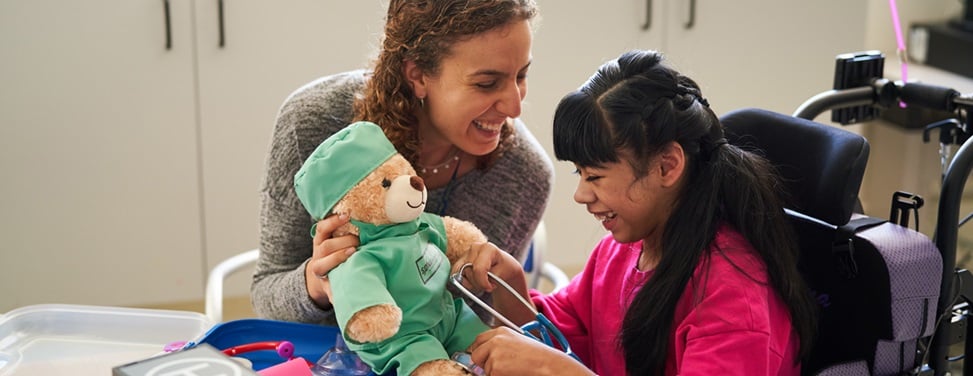







Soothing the soul
Our music therapy program nurtures patients with bedside serenades, rap workshops and more.
Find out more




Here to serve you
Explore our network of care for kids, from the tiniest to teens and young adults.




World-class docs
We'll help you find the best provider for your child.




Stress-free visits
Accommodations. Admission. Discharge. Procedure prep. We've got you covered.




Extraordinary kid care
Our specialists handle conditions ranging from the common to the most rare.




Referrals made easy
Contacts and resources to get your patients to our pediatric specialists




Best in Northern CA
We're ranked #1 in pediatric cancer, heart surgery, cardiology & more.





Spina bifida is the most common permanently disabling birth defect in the United States, affecting about 1 of every 1,000 pregnancies. An estimated 70,000 people in the U.S. live with the condition. It occurs in the first month of pregnancy when the spinal column of the fetus doesn't close completely.
Spina bifida can be diagnosed before the baby is born. In some cases, after an extensive risk assessment for mother and fetus, fetal surgery may be an option to repair or minimize the defect.
The condition can range from mild to severe. Most children born with this birth defect survive, but depending on its severity, they may develop disabilities, which may include paralysis; difficulty controlling bowel and bladder function; hydrocephalus (excess fluid in the brain); and impaired cognitive, social and psychological development. The degree of disability is usually related to the location of the spinal column opening – the higher this opening, the greater the impairment.
In most cases, the exact cause of spina bifida is unknown, although certain genetic and environmental factors may contribute. Due in part to improved treatments, many people with spina bifida now live well into adulthood and have a good quality of life, though they may need lifelong care.
Our approach to spina bifida
The UCSF Fetal Treatment Center is a world leader in evaluating and treating birth defects, such as spina bifida, before delivery. In 1981, we performed the first successful open fetal surgery ("open" is the traditional approach, in which the surgeon works through a large incision), and we have more experience than any institution worldwide with both open and minimally invasive fetal surgery. Our team includes fetal and pediatric surgeons, radiologists, perinatologists, neonatologists, cardiologists, urologists, geneticists, anesthesiologists, pediatric neurologists, pediatric neurosurgeons, nurses and social workers. These experts work collaboratively to ensure our patients receive care that meets all their needs.
Certain genetic and environmental factors may contribute to the development of spina bifida, including:
The three most common types of spina bifida are:
Occulta is the mildest form of the disease. Vertebrae are malformed, but the spinal cord and its covering are undamaged. The condition typically doesn't cause disability or symptoms, though some children may have minor issues, such as back pain or slight problems with bladder function. In fact, about 5 to 10% of the population may have spina bifida occulta without being aware of it. In many cases, the only visible sign is an abnormal tuft of hair, birthmark or dimple at the defect.
Meningocele is more severe. The meninges (membranes that cover and protect the spinal cord) protrude from the spinal opening and form a fluid-filled sac visible on the baby's back. The sac may be covered by a thin layer of skin. For some babies, the defect causes few or no symptoms, while others experience complications, such as partial paralysis or urinary and bowel dysfunction.
Myelomeningocele is the most severe form of the disease. The meninges and spinal cord are exposed through the opening in the spine. Most babies born with this condition survive but have a variety of health problems, including:
Spina bifida can cause a wide range of symptoms, depending on the size and location of the gap in the spine. In general, the higher the opening on the spine, the greater the impairment.
Some symptoms associated with spina bifida include:
Spina bifida is usually detected by prenatal tests conducted at different points in a pregnancy. These include:
If prenatal testing detects spina bifida, you’ll be referred to our Fetal Treatment Center for further evaluation and counseling. Our evaluation process includes the following:
When spina bifida is mild, it may not be diagnosed until after the baby is born. Imaging tests, such as magnetic resonance imaging (MRI) or computed tomography (CT) scans, may be used if there's a reason to suspect abnormalities in a newborn's spine or vertebrae.
If hydrocephalus is suspected, doctors may perform a CT scan or ultrasound of the baby's brain.
There is no spina bifida cure, but we have a number of treatments for managing the condition and preventing complications.
In some cases, when spina bifida is diagnosed before birth, the baby can undergo surgery in utero to repair or minimize the spinal defect. The procedure is performed by fetal surgeons after an extensive risk assessment of parent and fetus.
Treatment after birth may include surgery, medications, physical therapy and behavioral therapy. Elements of the treatment plan depend on the defect's type and severity and your child's age and overall health, as well as personal preferences.
Children with the mildest form of the disease, spina bifida occulta, usually don't need treatment.
Children with spina bifida meningocele typically can be treated without surgery. However, they may develop complications, such as bladder problems and hydrocephalus. Hydrocephalus is treated with a ventriculoperitoneal (VP) shunt, a thin tube implanted in the brain that drains the excess fluid into the abdomen, where the body can absorb it. Untreated hydrocephalus may cause movement disorders or developmental delays.
Treatment for myelomeningocele requires surgery either before or after the baby is born.
Postnatal treatment
Most often, the baby undergoes surgery shortly after birth to close the normal tissues of the back. This is done to protect the spinal cord and prevent infections. Since most babies with myelomeningocele develop hydrocephalus, they also require placement of a VP shunt. In addition, these children may develop a progressive tethering of the spinal cord, in which the spinal cord and vertebrae don't stretch as the child grows. This may cause a loss of muscle function in the legs, bowels and bladder. Surgery on the spinal cord may be performed to help restore function. Children with bladder problems are treated by a urologist, who may suggest catheterization, in which a small tube is inserted into the bladder to drain urine.
Prenatal treatment
In some cases, we can surgically repair the defect before the baby is born. The neurosurgeon makes incisions through the pregnant person's abdomen and into the uterus to reach the fetus and close the exposed spinal cord and layers of the back. Not all fetuses with myelomeningocele are candidates for this surgery, but research shows that it may reverse the development of myelomeningocele and reduce its complications. A study by USCF found that fetal surgery lessened the need to shunt fluid from the brain, improved the child's motor skills and increased their likelihood of being able to walk unassisted.
Many children with spina bifida experience partial or complete paralysis and need assistive devices, such as braces, crutches or wheelchairs. Specialists in orthopedics and physical therapy can teach these kids special muscle-strengthening exercises. Some children may also need surgery on the hips, legs and feet.
It's common for children with spina bifida to develop an allergy to latex (natural rubber), which may result from early exposure during surgeries and other medical procedures. If your child has this allergy, avoid exposing them to latex products, such as baby bottle nipples, pacifiers and balloons. There are latex-free options for many products.
UCSF Benioff Children's Hospitals medical specialists have reviewed this information. It is for educational purposes only and is not intended to replace the advice of your child's doctor or other health care provider. We encourage you to discuss any questions or concerns you may have with your child's provider.

Ranked among the nation's best in 11 specialties

successful open fetal surgery in the world

in number of fetal surgery clinical trials
Soothing the soul