










Feeling at home
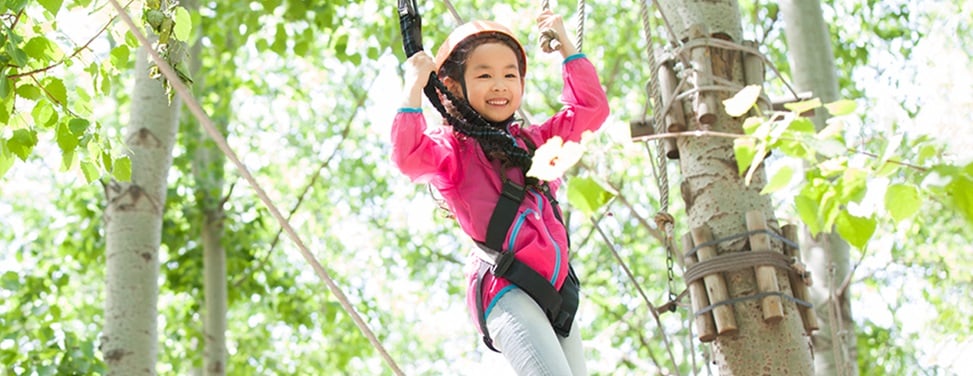
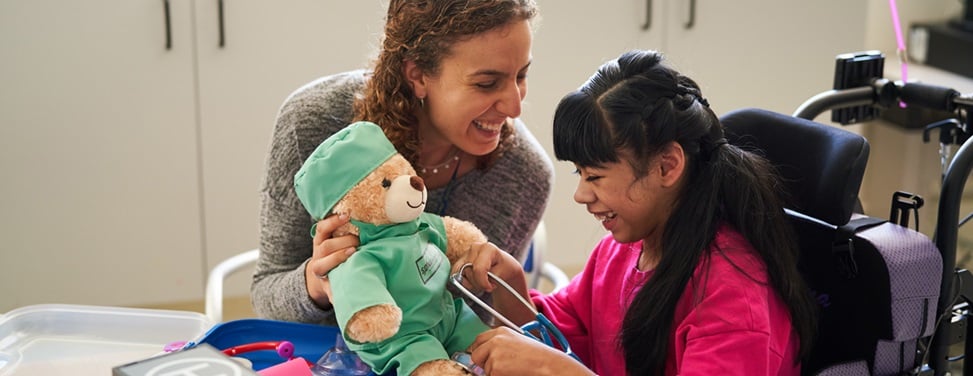
From bedside bingo to therapy dogs, we're here to help kids smile and feel more like themselves.
Visit Child Life services




Here to serve you
Explore our network of care for kids, from the tiniest to teens and young adults.




World-class docs
We'll help you find the best provider for your child.




Stress-free visits
Accommodations. Admission. Discharge. Procedure prep. We've got you covered.




Extraordinary kid care
Our specialists handle conditions ranging from the common to the most rare.




Referrals made easy
Contacts and resources to get your patients to our pediatric specialists




Best in Northern CA
We're ranked #1 in pediatric cancer, heart surgery, cardiology & more.





Non-Hodgkin's lymphoma is one of the two main types of lymphoma, a cancer that develops in the lymphatic system. The other type is Hodgkin's lymphoma. The difference between the two can be seen by looking at the cancer cells under a microscope. In non-Hodgkin's lymphoma, a specific cell type called a Reed-Sternberg cell isn't present.
While its exact cause is unknown, certain factors can increase a child's risk of developing this cancer, including a weakened immune system and past infection with the Epstein-Barr virus (a common herpesvirus found worldwide). Non-Hodgkin's lymphoma affects boys almost three times more often than girls, and it's more common in white children than in children of other races.

Top 10 in the nation and best in Northern California for cancer care
Ranked among the nation's best in 11 specialties

Accredited by the Foundation for Accreditation of Cellular Therapy
There are many types of non-Hodgkin's lymphoma, but the three main ones affecting children are aggressive mature B-cell non-Hodgkin's lymphoma, lymphoblastic lymphoma and anaplastic large cell lymphoma.
Aggressive mature B-cell non-Hodgkin's lymphoma
This type of non-Hodgkin's lymphoma develops from white blood cells called B lymphocytes, or B cells, and it spreads quickly. There are several subtypes:
Lymphoblastic lymphoma
Lymphoblastic non-Hodgkin's lymphoma accounts for about 35% of lymphoma cases in children. This disease typically involves T cells (another type of lymphocyte), though it can involve B cells. It usually occurs with a tumor in the chest and swollen lymph nodes. Sometimes the bone marrow and central nervous system are also affected.
Anaplastic large cell lymphoma
This type of non-Hodgkin's lymphoma generally begins in T cells and can involve the skin, lymph nodes, lungs, testicles, muscles and digestive tract.
In many children, non-Hodgkin's lymphoma is already extensive when diagnosed. About one-third of cases originate in the neck or chest, one-third in the abdomen and one-third elsewhere in the body.
Many symptoms of non-Hodgkin's lymphoma in children can also be caused by other conditions, such as infections. Nevertheless, your child should be evaluated by a doctor if they have any of the following symptoms:
When the cancer is in the abdomen, the area can become very swollen, sometimes resembling a pregnant belly. When the cancer causes lymph tissue near kidneys or intestines to swell, urine or feces passing through the area may become blocked, causing abdominal pain.
If the chest is involved, the child's head and neck may swell and they may have trouble breathing. The cancer can press on the superior vena cava (SVC), the large vein that carries blood from the head and arm back to the heart, and that pressure can cause the head, arm and upper chest to turn reddish and eventually bluish. Known as SVC syndrome, this condition can affect the brain and be life-threatening. Children with SVC syndrome need immediate treatment.
Your child's doctor may order a number of diagnostic tests, including imaging studies, such as a CT scan or PET scan. To confirm the diagnosis, your child will have a biopsy, which is the removal of a tissue sample that's then examined under a microscope in the lab to see whether cancer cells are present.
Your child's doctor will choose the biopsy technique that best suits your child's condition. The goal is getting enough tissue to make an accurate diagnosis as quickly as possible while minimizing discomfort and the risk of complications. Types of biopsies include:
The following stages are used specifically for childhood non-Hodgkin's lymphomas:
Stage 1
To be classified as stage 1, the cancer must:
Stage 2
To be classified as stage 2, one of the following criteria must be met:
Stage 3
To be classified as stage 3, one of the following criteria must be met:
Stage 4
In stage 4, cancer is found in the bone marrow, the brain or the fluid that surrounds the brain and spinal cord (cerebrospinal fluid). It may have spread to other organs.
Recurrent
This is when cancer comes back after it has been treated. It may recur in the area where it first appeared or in another part of the body.
Non-Hodgkin's lymphoma in children has a cure rate of about 70%. We have three main approaches to treatment.
Chemotherapy, the primary treatment for non-Hodgkin's lymphoma, uses drugs to kill cancer cells and shrink tumors. Chemotherapy is called a systemic treatment because the drugs enter the bloodstream and can therefore kill cancer cells throughout the body.
Chemotherapy may be taken orally (as pills) or injected into a vein (intravenous administration) or into muscle. For certain lymphomas that have spread to the brain or may do so, some chemo drugs can be injected into the cerebrospinal fluid.
Radiation therapy uses a high-dose, focused X-ray beam to kill cancer cells and shrink tumors. It's very effective in treating lymphoma.
Sometimes lymphoma cells become resistant to radiation therapy or chemotherapy. Extra-high doses of chemotherapy may then be necessary to treat the cancer.
Because these high chemo doses destroy bone marrow, some of the patient's marrow is taken from their bones before their chemo begins. The marrow is frozen, and after the patient finishes the course of high-dose chemotherapy (with or without radiation therapy), their collected marrow is thawed and returned by needle into a vein so that it can replace the destroyed marrow.
This type of bone marrow transplant is called an autologous transplant because the patient's own cells are used (auto means "self" or "same"). If the marrow is taken from another person, the transplant is called an allogeneic transplant (allo means "other").
UCSF Benioff Children's Hospitals medical specialists have reviewed this information. It is for educational purposes only and is not intended to replace the advice of your child's doctor or other health care provider. We encourage you to discuss any questions or concerns you may have with your child's provider.
 2
2
Feeling at home