




Tender wagging care
Our therapy dogs spread joy and smiles at the bedside and throughout the hospital.
Visit Child Life services




Here to serve you
Explore our network of care for kids, from the tiniest to teens and young adults.




World-class docs
We'll help you find the best provider for your child.




Stress-free visits
Accommodations. Admission. Discharge. Procedure prep. We've got you covered.




Extraordinary kid care
Our specialists handle conditions ranging from the common to the most rare.




Referrals made easy
Contacts and resources to get your patients to our pediatric specialists




Best in Northern CA
We're ranked #1 in pediatric cancer, heart surgery, cardiology & more.





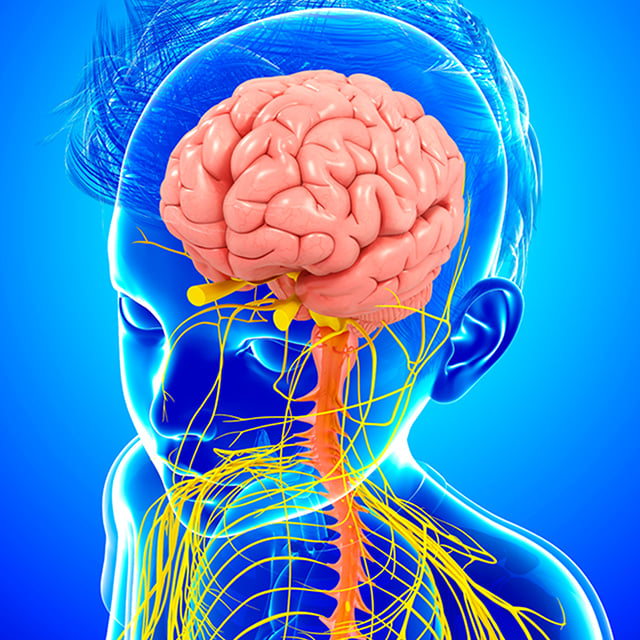
Cavernous malformations – also called cavernous angiomas or cavernomas – are abnormal clusters of blood vessels. They contain small pockets, or "caverns," of blood lined with a thin layer of cells (the endothelium). Children with cavernous malformations may have headaches, hemorrhages, seizures and stroke symptoms.
Cavernous malformations vary in size from microscopic to inches in diameter and can occur anywhere in the body, including the brain, eyes, kidney, liver, nerves, rectum and spinal cord. Cerebral cavernous malformations, which develop in the brain or spinal cord, are the most serious.
Cavernous malformations are treated at our UCSF Pediatric Stroke and Cerebrovascular Disease Center, the only comprehensive cerebrovascular disease center for children in the country, staffed by the world's leading experts in pediatric stroke and cerebrovascular disease.
UCSF has been named a Center of Excellence in Cerebral Cavernous Malformation by the advocacy group Angioma Alliance in recognition of the high-quality, multispecialty care we provide for these vascular malformations.
Some children with cavernous malformations may not experience symptoms at all, while others may suffer from a variety of problems. Symptoms typically depend on the location of the malformation and may include:
Bleeding, called a hemorrhage, in the brain that may damage surrounding brain tissue
Headaches ranging in severity, duration and intensity
Neurological problems such as weakness in arms and legs as well as problems with vision, balance, memory and attention
Seizures ranging in severity, duration and intensity
Cavernous malformations usually are not diagnosed until they start causing symptoms.
If your child has symptoms, his or her doctor may recommend a magnetic resonance imaging (MRI) scan, which is the best way to diagnose cavernous malformations. This non-invasive procedure uses a combination of large magnets, radiofrequencies and a computer to produce a detailed image of the brain. An MRI may require sedation or anesthesia for children.
MRI scans may be repeated over the course of your child's treatment to detect any change in the size of the malformation, recent bleeding and the appearance of new lesions.
At UCSF Benioff Children's Hospital, a team of experts — including a neurologist, neurosurgeon and neuroradiologist — will work with you and your family to develop the best treatment plan for your child.
Treatments include close monitoring or observation and surgery.
If your child's cavernous malformation isn't causing any problems, your child's doctor may recommend that the malformation simply be observed with yearly magnetic resonance imaging (MRI) scans to detect changes.
However, it is impossible to predict what will happen with these malformations. Some will cause repeated hemorrhages with worsening symptoms such as difficulty speaking, headaches, seizures, vision problems or weakness in the arms or legs, while others remain inactive and don't cause symptoms for many years.
Surgery is often recommended as treatment. Because these malformations are so distinct from the surrounding brain tissue, in many cases, they can be completely removed without causing problems.
It is important to remove the entire malformation because it can grow back if a small piece is left behind.
The risk of the operation depends on the size and location of the cavernous malformation and the general health of your child.
UCSF Benioff Children's Hospitals medical specialists have reviewed this information. It is for educational purposes only and is not intended to replace the advice of your child's doctor or other health care provider. We encourage you to discuss any questions or concerns you may have with your child's provider.
One of the nation's best for neurology & neurosurgery

in NIH funding among U.S. neurology programs

Ranked among the nation's best in 11 specialties
Tender wagging care