



Soothing the soul
Our music therapy program nurtures patients with bedside serenades, rap workshops and more.
Find out more




Here to serve you
Explore our network of care for kids, from the tiniest to teens and young adults.




World-class docs
We'll help you find the best provider for your child.




Stress-free visits
Accommodations. Admission. Discharge. Procedure prep. We've got you covered.




Extraordinary kid care
Our specialists handle conditions ranging from the common to the most rare.




Referrals made easy
Contacts and resources to get your patients to our pediatric specialists




Best in Northern CA
We're ranked #1 in pediatric cancer, heart surgery, cardiology & more.





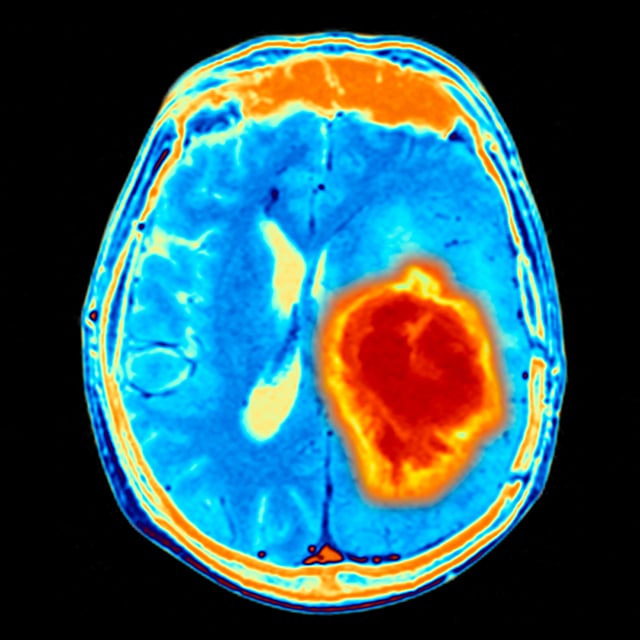
A pediatric brain tumor is a growth of abnormal cells in a child's brain. About 3,000 children in the United States are diagnosed with brain tumors each year, most between the ages of 3 and 12. There are many types of pediatric brain tumors, distinguished by where in the brain they develop and whether they are malignant (cancerous) or benign (noncancerous). Cancerous brain tumors are the second most common cancer in children, after leukemia.
Brain tumors in children are different from brain tumors in adults and generally more responsive to treatment. If your child is diagnosed with a brain tumor, the outlook depends on certain factors, such as their age, the type of tumor, its location and how much can be surgically removed.
Most brain tumors in children result from genetic abnormalities in the cells that become a tumor. Researchers are studying parents of children with brain tumors to see whether exposure to certain chemicals may alter a gene that protects the body from cancer. In addition, children who have undergone radiation therapy to the head for other cancers are at a higher risk for developing brain tumors.
Benign brain tumors don't contain cancer cells. If completely removed by surgery, they usually won't return. If they can't be fully removed, the remaining tumor may grow, which could require additional treatments, such as chemotherapy or radiation. Malignant brain tumors require immediate treatment. They usually grow quickly, spread to surrounding tissue and may return after treatment.
There are two main categories of brain tumors, primary and secondary.
Primary brain tumors
Tumors that begin in brain tissue are known as primary brain tumors. The most common are gliomas, which begin in the brain's glial cells (tissue that supports the nerve cells). Types of gliomas include:
Types of primary brain tumors that don't begin in glial tissue include:
Secondary brain tumors
A secondary brain tumor occurs when cancer begins in another body part and spreads to the brain. For example, if lung cancer travels to the brain, it is a secondary brain tumor caused by metastatic lung cancer. In this case, the tumor cells resemble abnormal lung cells, not abnormal brain cells. Secondary brain tumors are rare in children, accounting for fewer than 5% of cases.
Common signs of brain tumors in children may include:
If your child's doctor suspects a brain tumor, the first step will be a physical exam, checking for certain signs, such as swelling behind the eyes. Typically, the doctor will recommend a CT scan or MRI scan to obtain detailed images of the brain.
Blood tests are performed to check whether your child can safely undergo diagnostic surgery, if needed, such as a biopsy to identify the tumor type. The biopsy may require more than one operation, depending on the tumor's characteristics and your child's overall health.
UCSF neurologists and neurosurgeons are supported by one of the most advanced imaging centers in the world, with access to guidance from pioneers in the field. We use MRI scanning during operations to increase surgical accuracy and are one of only a few centers in California offering noninvasive treatments with the Gamma Knife and CyberKnife.
We are also leaders in research on new treatments. Our patients often have opportunities to participate in clinical trials investigating promising medications and procedures. And our research laboratories are studying the molecular abnormalities that give rise to pediatric brain tumors.
UCSF Benioff Children's Hospitals medical specialists have reviewed this information. It is for educational purposes only and is not intended to replace the advice of your child's doctor or other health care provider. We encourage you to discuss any questions or concerns you may have with your child's provider.

UCSF doctors have been pioneering a minimally invasive procedure for pediatric brain tumors that has been used for years to treat epilepsy.

Our team used cutting-edge VR technology to help a patient with neurofibromatosis type 1 and her family prepare for brain surgery.
One of the nation's best for neurology & neurosurgery
Ranked among the nation's best in 11 specialties
Soothing the soul