





Saving future lives
500+ UCSF investigators are researching cures for hundreds of childhood and adult diseases.





Here to serve you
Explore our network of care for kids, from the tiniest to teens and young adults.




World-class docs
We'll help you find the best provider for your child.




Stress-free visits
Accommodations. Admission. Discharge. Procedure prep. We've got you covered.




Extraordinary kid care
Our specialists handle conditions ranging from the common to the most rare.




Referrals made easy
Contacts and resources to get your patients to our pediatric specialists




Best in Northern CA
We're ranked #1 in pediatric cancer, heart surgery, cardiology & more.





Apnea is a condition in which a baby periodically stops breathing for more than 15 to 20 seconds. Premature infants, particularly those born more than seven weeks early, may suffer from apnea from time to time.
While in the womb, babies receive oxygen from the mother's placenta. Once born, they need to breathe on their own. Some premature babies can't breathe normally when first born because their brains aren't yet programmed to sustain nonstop breathing. This is called central apnea.
Premature babies can also suffer from obstructive apnea, which occurs when their small airways become blocked. This may be caused by mucus, or the baby may be in a position that kinks the airway.
Apnea is associated with another condition, called bradycardia. This is a slowing of the heart rate, usually to less than 80 beats per minute for a premature baby. Bradycardia often follows apnea or periods of very shallow breathing.
Babies experiencing apnea will:
Babies may also experience bradycardia, a condition in which a baby's heart rate drops to below 80 beats per minute. This usually occurs after a period of apnea.
The doctor will begin by conducting a physical examination of your baby to try and determine if the apnea is due to the premature birth or another problem.
Tests used to make a definite diagnosis may include:
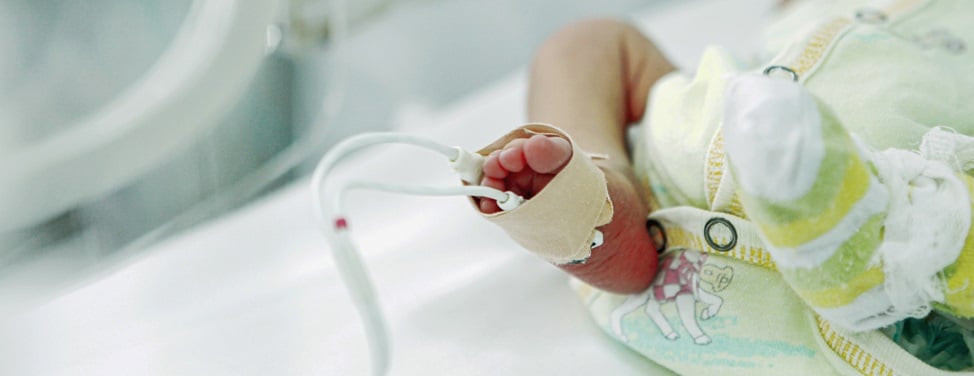
Because most premature babies have apnea, they're sent to the Intensive Care Nursery where they're attached to a monitor called a cardiorespiratory monitor. An alarm sounds if the monitor detects that your baby stops breathing for too long or if his or her heart rate drops. If the alarm sounds, a nurse immediately checks your baby for signs of apnea. False alarms are not uncommon.
If your baby does experience apnea and isn't breathing, a nurse will rub your baby's back, arms and legs to try to stimulate breathing. Your baby's head may also be turned or your baby may be placed on his or her stomach or back. If this stimulation does not work, a bag filled with oxygen will be placed over your baby's mouth. This is called mask-and-bag breathing.
In addition to monitoring, babies with apnea may also be treated with medications and respiratory support.
Several medications can help reduce spells of apnea by stimulating the part of your baby's brain that controls breathing. Aminophylline and theophylline are the most commonly used drugs. Caffeine may also be used.
Respiratory support may be used to help your baby start breathing again.
UCSF Benioff Children's Hospitals medical specialists have reviewed this information. It is for educational purposes only and is not intended to replace the advice of your child's doctor or other health care provider. We encourage you to discuss any questions or concerns you may have with your child's provider.

Ranked among the nation's best in 11 specialties
Saving future lives