

























University of California San Francisco | About UCSF | UCSF Medical Center
Search Site | Find a Doctor
Prepare Program

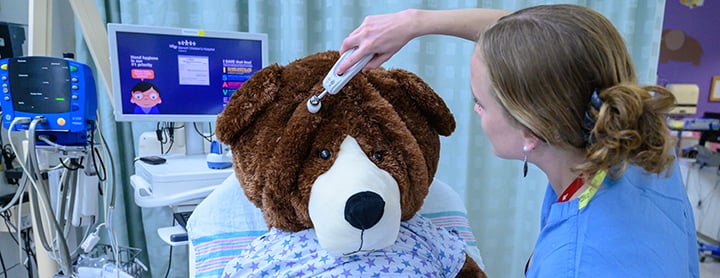
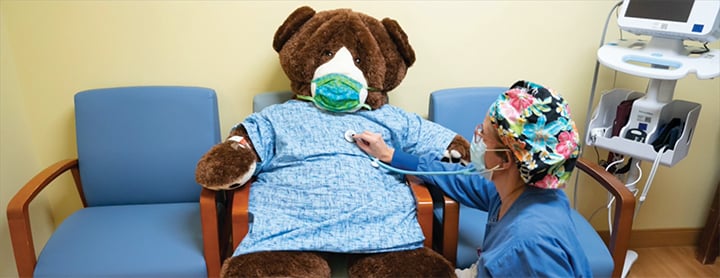
Before your child's surgery, your doctor will schedule an appointment for you with the Pediatric Prepare Program (Pedi Prepare), our anesthesia and surgical evaluation program. Pedi Prepare makes sure your child is ready for surgery and provides tests and blood work. The purpose of this program is to help children understand and cope with coming to the hospital. Your appointment includes hospital registration and financial counseling.

Usually, your child's Pedi Prepare appointment will take place the week prior to admission and will last one to two hours. If you live outside the Bay Area and need hotel accommodations, please arrange for lodging for the night before surgery. Our Physician Referral Service has information about local lodging arrangements. Please call (888) 689-UCSF.

If your child is in good health or has been seen by the Pedi Prepare within the last three months with no change in medical condition, you may have a phone appointment instead. Your child's doctor will make this decision.

  • Read More

Your child's Pedi Prepare evaluation will include:

  • Measurement of vital signs, including blood pressure, heart rate, etc.
  • A nurse practitioner or anesthesia doctor will complete a brief medical history and physical examination. An anesthesia doctor or nurse practitioner will talk to you about anesthesia and pain during and after your child's operation.
  • Your child may have an electrocardiogram (ECG), blood test or chest X-ray.
  • During the Pedi Prepare appointment, we will provide instructions for the day of your child's admission, including restrictions on what he or she may eat or drink before. You will be told when to arrive and where to check in. Please plan to arrive two hours before the scheduled operation. You also may be asked to complete forms required for admission.
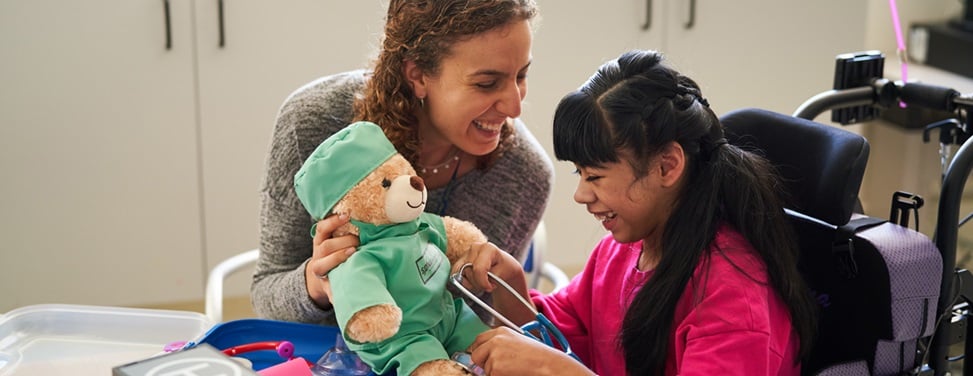
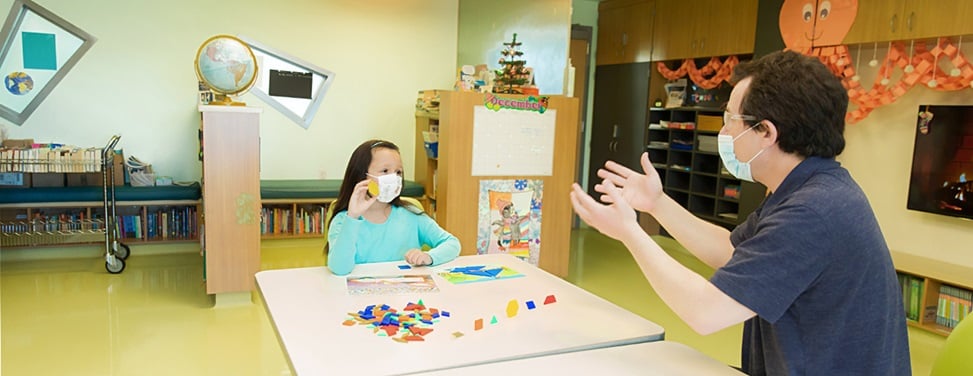
  • If you have concerns about talking to your child about the surgery or procedure, you can request that a Child Life Specialist (CLS) contact you. Concerns can sometimes be addressed over the phone, but you can also bring your child in for an appointment with CLS.
  • Read Less

Request an Appointment

Getting Here

Pediatric Prepare Program
400 Parnassus Ave., Third Floor, Room A-334
San Francisco, CA 94143-0210
Phone: (415) 353-1150
Fax: (415) 353-8800

Hours: Monday to Friday
7:30 a.m. – 5:30 p.m.

What to Bring

  • Health insurance information including authorizations or referrals
  • List of your child's prescription medications and dosages
  • List of medications your child is allergic to
  • List of questions you may have
  • Recent test results related to your child's condition
  • Paper and pencil to take notes

Last updated January 20, 2012

Questions & Answers

Dr. Andrew Infosino, a pediatric anesthesiologist, prepared the following questions and answers from the UCSF Department of Anesthesia.

How long should my child fast before surgery?

This depends on your child's age, the surgery, and your child's underlying medical condition. Sometimes, children are allowed to drink clear liquids until two or three hours before surgery. At other times, children must refrain from liquids and solids after midnight before their surgery. This information should be discussed with you in detail during your Prepare Program visit.

What if my child develops a cold before surgery?

You should notify your child's surgeon and the Prepare Program office at (415) 353-1099 to determine what should be done. In some instances, surgery should be delayed until the cold has resolved. At other times, it is not necessary to postpone surgery.

May I stay with my child while he or she falls asleep?

Under some circumstances, parents may be present while their child is falling asleep. You should discuss this with your anesthesiologist before surgery.

Where will my child go after surgery is finished?

Your child will usually be taken to the Pediatric Recovery Room. After some types of surgery, children are taken directly to the Pediatric Intensive Care Unit.

When will I be able to see my child after surgery is finished?

You may join your child in the Pediatric Recovery Room once he or she has been assessed by the Recovery Room nurse. This takes at least 10 to 15 minutes.

What options does my child have for pain control after surgery?

This depends on the type of surgery your child will have, as well as any underlying medical conditions. Pain control methods include intravenous pain medications, epidural blocks, caudal blocks, and other nerve blocks. Postoperative pain management should be discussed with your anesthesiologist before surgery to determine the most appropriate method for your child.

Who do I contact if I have any questions before my child has surgery?

You may call your child's surgeon for any questions, or you may call the Prepare Program office at (415) 353-1099.

What should my child bring to the hospital?

The hospital will provide pajamas. You may bring your child's own clothes, slippers and a robe. We especially recommend bringing your child's favorite toy or security object.

Are my child's brothers and sisters allowed to visit?

Yes! Brothers and sisters are encouraged to visit. However, siblings under the age of 12 must be screened by a nurse to make sure they have no contagious infections. Just ask your child's nurse to set up a visiting time.

Is my family allowed to tour the hospital before surgery?

Yes! Child Life Services offers tours of the hospital including the Children's Surgery Center and the Pediatric Unit. You may schedule your child for the pre-admission program by calling Child Life Services at (415) 353-1099.

Related Information

Ways to Give

Clinics & Centers

Clinic Team

Atsuko Baba
Dr. Atsuko Baba,
pediatric anesthesiologist
Claire M. Brett
Dr. Claire M. Brett,
pediatric anesthesiologist
Charles B. Cauldwell
Dr. Charles B. Cauldwell,
pediatric anesthesiologist
Marla B. Ferschl
Dr. Marla B. Ferschl,
pediatric anesthesiologist
Michael R. Harrison
Dr. Michael R. Harrison,
fetal and pediatric surgeon
Shinjiro Hirose
Dr. Shinjiro Hirose,
pediatric surgeon
Andrew Infosino
Dr. Andrew Infosino,
pediatric anesthesiologist
Hanmin Lee
Dr. Hanmin Lee,
pediatric surgeon
Tippi C. Mackenzie
Dr. Tippi C. Mackenzie,
pediatric surgeon
David L. Robinowitz
Dr. David L. Robinowitz,
anesthesiologist
Laura Siedman
Dr. Laura Siedman,
pediatric anesthesiologist
Maurice S. Zwass
Dr. Maurice S. Zwass,
anesthesiologist and pain management specialist

Patient Experiences